
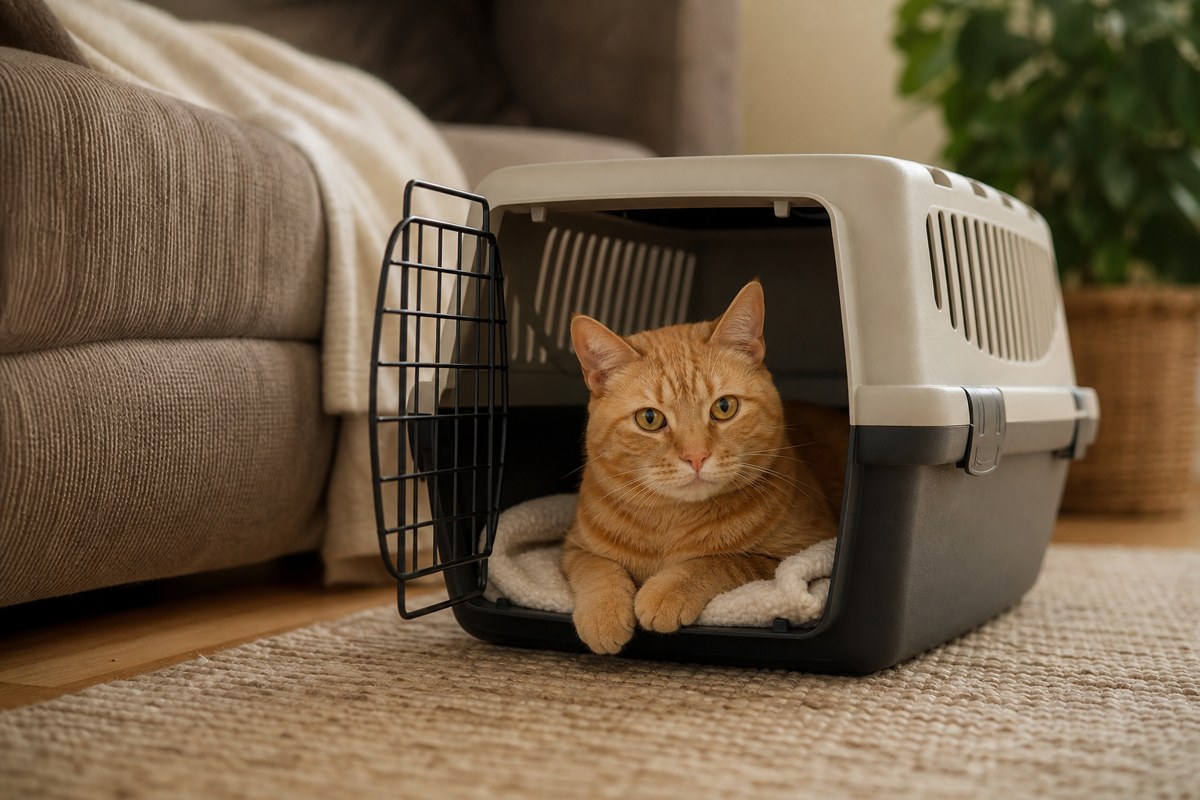
Quick answer: Choose a carrier your pet can stand up, turn around and lie down in comfortably, with good ventilation and a secure closure. Hard carriers are best for cats and car rides. Soft carriers are great for small pets in airplane cabins. Always check your airline’s size rules before flying.
For most cats and small dogs, a carrier is the only safe way to get to the vet, travel by car or fly. A good one protects your pet, keeps them from escaping, and helps them feel secure.
But a lot of pets panic at the sight of their carrier. The right carrier, and a little practice, can make trips much calmer for everyone.
Soft vs. Hard Carriers
| Soft-sided | Hard-sided | |
|---|---|---|
| Best for | Airline cabins, small dogs, short trips | Cats, car travel, vet visits |
| Pros | Lightweight, flexible, fits under seats | Sturdy, easy to clean, often has a removable top |
| Cons | Harder to clean, less protection | Heavier, less flexible for under-seat storage |
| Look for | Mesh windows, strong zippers, firm base | Top-loading door, secure latches, ventilation on several sides |

How to Size a Carrier
Measure your pet from nose to the base of the tail, and from the floor to the top of their head while standing. Your pet should be able to stand, turn around and lie down comfortably. Too big isn’t better for car rides, since a pet can slide around more.
Check the weight limit too. Carriers list a maximum weight, and straps and handles need to support it.
Features to Look For
- Top-loading opening. Much easier for getting a reluctant cat in and out, and for vets to examine a scared pet.
- Removable top. Lets nervous pets stay in the bottom half during exams.
- Secure closures that a determined paw can’t push open.
- Ventilation on multiple sides.
- Washable, absorbent bedding in case of accidents or motion sickness.
- Seat belt loop or strap for car travel.

Flying With a Pet
Most airlines that allow pets in the cabin require a carrier that fits under the seat in front of you, with your pet able to stand and turn around inside. Size limits, fees and the number of pets allowed per flight vary by airline, so check directly with your airline before booking and again before you travel.
Many airlines restrict or don’t allow flat-faced (brachycephalic) breeds like pugs, bulldogs and Persian cats in cargo because of breathing risks. Talk to your vet before flying with any pet, especially a senior pet or one with health problems.
How to Help Your Pet Like Their Carrier
- Leave the carrier out at home all the time with a soft blanket inside, so it’s just part of the furniture.
- Toss treats or meals inside so your pet goes in on their own.
- Close the door for short periods while you’re nearby, then build up time.
- Take short car rides that end somewhere good, not just the vet.
- Cover the carrier with a light towel during trips. Many cats feel calmer when they can hide.

Helpful Products
- Hard-sided pet carriers with top door: Easier to load cats and great for vet visits.
- Airline-compliant soft carriers: Fits under most airline seats; check your airline’s size rules.
- Washable carrier pads: Absorbent bedding for accidents and comfort.
Frequently Asked Questions
What size carrier does my cat need?
Your cat should be able to stand up, turn around and lie down comfortably. Many adult cats fit a carrier around 18 to 20 inches long, but measure your own cat.
Is a soft or hard carrier better for cats?
Many vets prefer hard carriers with a top door and removable lid, since they’re sturdy, easy to clean and make exams less stressful.
Can my dog fly in the cabin?
Many airlines allow small dogs in the cabin in an under-seat carrier. Rules, fees and size limits vary, so check with your airline.
How do I get my cat into a carrier?
Practice ahead of time with treats and leave the carrier out at home. On travel day, a top-loading carrier makes it much easier to gently lower your cat in.
The Bottom Line
A good carrier is a safety tool, not just a bag. Size it to your pet, choose soft or hard based on how you’ll use it, check airline rules before flying, and practice at home so the carrier becomes a safe space instead of a scary one.
Keep reading:
- The Ultimate Guide to Dog Beds: Finding the Perfect Fit
- Complete Cat Care Guide: Tips for Happy and Healthy Cats
- 10 Small Dog Breeds Perfect for Apartment Living
As an Amazon Associate, we earn from qualifying purchases. This post contains affiliate links.