
Max and Molly are brother and sister, both 12 years old, and both rescues. Max is an orange tabby who still acts like a kitten. Molly is a buff tabby who has slowed down a lot more than her brother. Same age, same litter, and they’re aging in completely different ways.
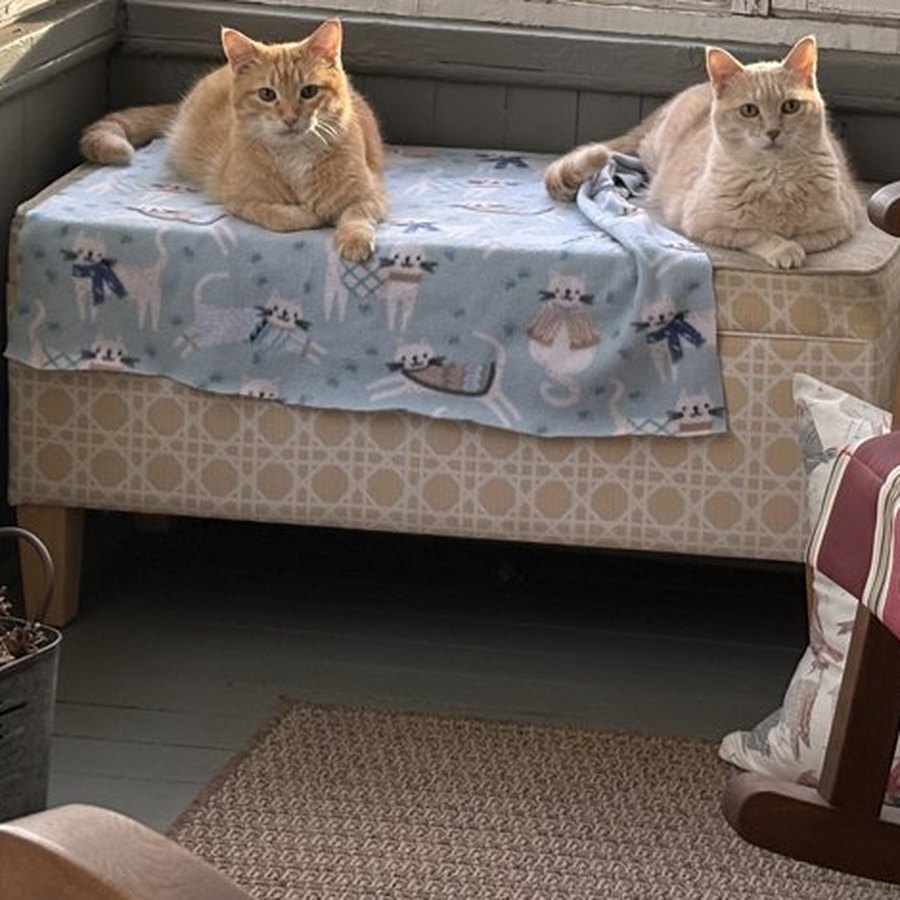
How Max and Molly Came Home
Max and Molly came to us from my sister-in-law, who was fostering a litter of four kittens. She’s a classic “foster fail” who can never bear to give any of her cats or dogs away.
At the time, we had just bought our house, and my wife’s family was helping us with renovations. So we made a deal: they’d help with the house, and we’d take two of the kittens. That’s how we ended up with Max and Molly. Sadly, they’re the only two of those four kittens still with us today.
Many veterinarians start thinking of cats as seniors somewhere after age 10, and cats are good at hiding when something is wrong. Here’s what senior-cat life looks like at our house, plus the general guidance that’s helped us.
Two Littermates, Two Very Different Seniors
Max still seems young. He loves to run around, goes crazy chasing a laser pointer, and leaps up the cat tree like it’s nothing. You’d never guess he’s 12.
Molly has definitely gotten slower. She can’t jump the way she used to, and she mostly stays at ground level now. I’m pretty sure she has some arthritis in her hips. She can still make it up the stairs, but you can tell it hurts, so we don’t let her go upstairs anymore.
It’s a good reminder that age is just a number. Two cats born in the same litter can need very different things in their senior years, so watch each cat individually.
What Changes in Senior Cats
Common changes as cats age include:
- Sleeping more and playing less
- Jumping less, or taking the “stairs” (a chair, then the counter) instead of leaping
- Changes in appetite, thirst or weight
- A less tidy coat, since stiff joints make grooming harder
- Litter box accidents, which can point to pain or a health issue rather than “bad behavior”
Arthritis: The Quiet Senior Cat Problem
Arthritis is very common in older cats, but they rarely limp. Instead, they quietly stop jumping, avoid stairs or spend more time on the floor, exactly what we’ve seen with Molly. If you notice these changes, talk to your vet. There are cat-safe pain management options, and never give a cat human pain medication, since many are toxic to cats.
Simple changes at home help too:
- Blocking off stairs that are clearly painful, like we do for Molly
- A litter box with a low entry so they don’t have to climb in
- Steps or a sturdy chair next to favorite high spots like the bed or a window
- Soft, warm beds at floor level. Molly’s favorite is a bed with a heating pad under a dining room chair, where she sleeps all the time.
- Food and water on the same floor where they spend most of their time
Keep an Eye on Water and Weight
Older cats are prone to conditions like kidney disease and an overactive thyroid, and early signs can include drinking more, peeing more, or losing weight while eating normally. Weighing your cats now and then and noticing changes in the water bowl can help you spot problems early.
Encouraging hydration helps too: a pet water fountain, extra water bowls around the house, or wet food. Max and Molly get wet food every morning and evening on top of their dry food.
Keep the Active Senior Moving
For a senior cat like Max who still has energy to burn, regular play keeps his body and brain in shape, and it keeps him out of trouble. When Max gets bored, he likes to pounce on Molly and attack her, and she does not appreciate it one bit. A few minutes with a laser pointer or a wand toy goes a long way. If you use a laser, end the session by letting your cat “catch” a toy or a treat so the game has a finish.
Do Littermates Stay Close?
Max and Molly do. Apart from his bored-cat ambushes, they’re very friendly with each other most of the time, and Max grooms Molly often. Mutual grooming like this is a sign of a strong bond between cats, and it’s sweet to see him looking after his slower sister, even if he’s also the one who tackles her.
Max also has a side hustle bothering our dogs. You can read about that in When the Cat Is the Pest.
Twice-a-Year Vet Visits
Many vets recommend checkups every six months for senior cats, often with bloodwork and a blood pressure check. Because cats hide illness so well, these visits are often how problems get caught early, and they’re the right time to bring up changes like Molly’s stiffness on the stairs.
Helpful Products
- Pet heating pads: A warm spot that’s easy on stiff senior joints, like Molly’s under the dining room chair.
- Low-entry litter boxes: Easier for arthritic cats to step into.
- Pet stairs for cats: Helps a stiff cat reach the bed or couch without jumping.
- Cat wand and laser toys: Keeps an energetic senior like Max busy (and off his sister).
Senior Cat FAQ
At what age is a cat considered a senior?
Many vets consider cats seniors somewhere after age 10, though every cat ages differently, even littermates like Max and Molly.
How can I tell if my older cat has arthritis?
Look for jumping less, avoiding stairs, staying on the floor, stiffness after resting or grooming less. Cats rarely limp, so these quieter changes are the usual signs. Your vet can confirm it and suggest treatment.
How often should a senior cat see the vet?
Many vets recommend checkups about every six months for senior cats, often with routine bloodwork.
Why does my cat groom her sibling?
Mutual grooming, called allogrooming, is a sign of a close bond between cats. Littermates who stay together often keep grooming each other for life.
Why is my older cat drinking more water?
Increased thirst can be a sign of conditions like kidney disease, diabetes or an overactive thyroid. It’s worth mentioning to your vet.
As an Amazon Associate, we earn from qualifying purchases. This post contains affiliate links.