
As an Amazon Associate, we earn from qualifying purchases. This post contains affiliate links.
Quick answer: A senior cat drinking a lot of water is not just a quirk of getting older. Increased thirst is one of the most common early signs of kidney disease, an overactive thyroid or diabetes in older cats, so it is worth booking a vet visit within a few days, and sooner if your cat seems unwell.
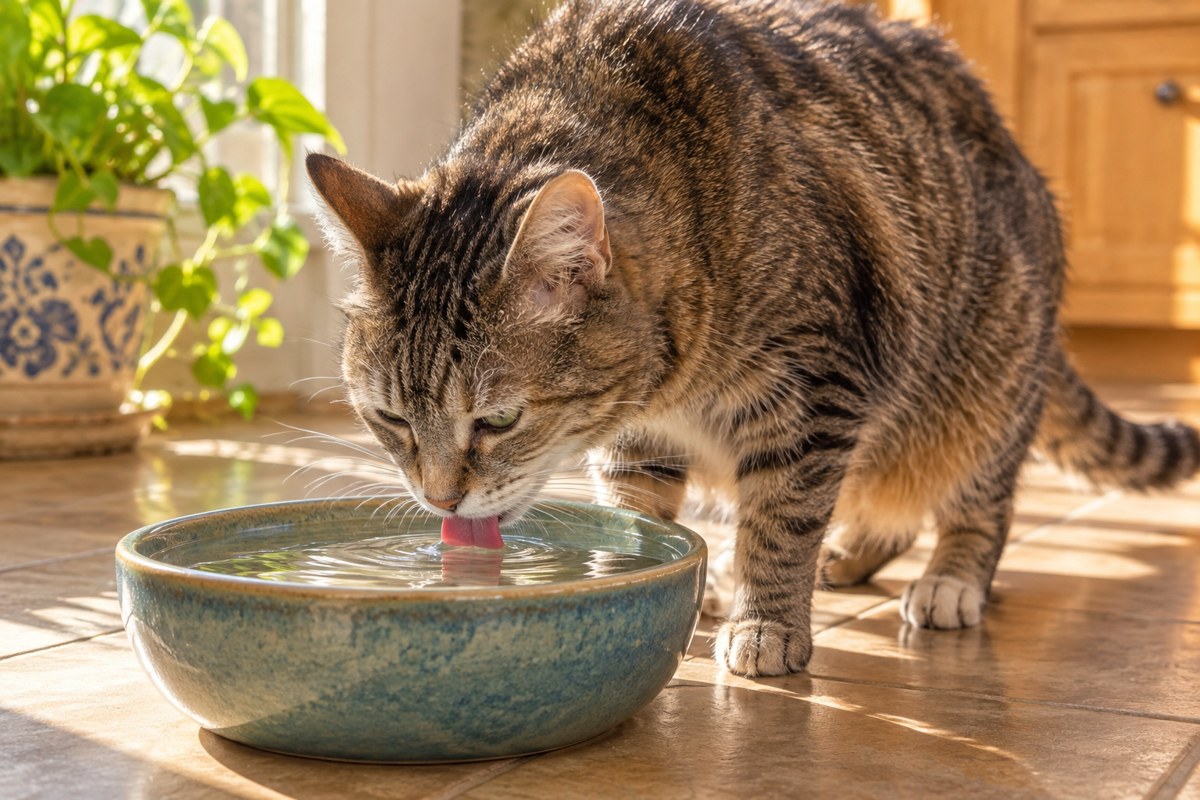
Cats are usually light drinkers. Their ancestors got most of their moisture from prey, and many cats today still sip only small amounts. So when an older cat starts camping by the water bowl, or the litter box suddenly fills up faster, it is a change worth paying attention to. We share our home with two 12-year-old tabbies, and you can read more about our approach to caring for senior cats.
The good news is that the most common causes of extra thirst in older cats can often be managed well when they are found early. This guide covers how much water is normal, the signs to watch for, the usual reasons behind it, and simple ways to track and support your cat at home, like offering a ceramic water fountain.
How Much Water Is Normal for an Older Cat?
There is no single perfect number, because how much a cat drinks depends a lot on what it eats. Wet food is roughly 70 to 80 percent water, so a cat on mostly canned food may barely touch the bowl. A cat on dry kibble gets very little moisture from its meals and will drink noticeably more.
As a rough guide, many vets consider a cat to be drinking too much when it takes in more than about 100 milliliters per kilogram of body weight per day (around 1.5 fluid ounces per pound). For a 10-pound cat, that is roughly 2 cups of water a day. Most healthy cats drink far less than that.
In real life, the most useful measure is your own cat’s normal. If your cat has been on the same food for months and is now emptying the bowl faster, or you are refilling it more often, that change matters more than any chart.
Signs Your Cat Is Drinking More Than Usual
- Refilling the bowl more often than you used to, even though nothing about the food or weather has changed.
- Bigger or more clumps in the litter box, since cats that drink more also pee more.
- Drinking from new places, like the sink, the shower, a toilet, plant saucers or your water glass.
- Lingering at the bowl for long sessions or returning to it many times a day.
- Accidents outside the litter box, which can happen when a cat needs to go more often than it can get to the box.
- Other changes alongside the thirst, such as weight loss, a bigger or smaller appetite, vomiting, a scruffy coat or less energy.
Common Reasons Senior Cats Drink More
| Possible cause | Other signs often seen | How vets usually check |
|---|---|---|
| Chronic kidney disease (very common in older cats) | Weight loss, poor appetite, vomiting, dull coat, bad breath | Blood work and a urine test to check how well the kidneys concentrate urine |
| Hyperthyroidism (an overactive thyroid, common after age 10) | Weight loss despite a big appetite, restlessness, more meowing, vomiting | A blood test for thyroid hormone (T4) |
| Diabetes | Weight loss with a big appetite, walking flat on the back legs, more often in overweight cats | Blood and urine glucose tests |
| Urinary tract problems | Frequent small pees, straining, blood in urine, peeing outside the box | Urinalysis and sometimes a urine culture |
| Diet or environment changes | Usually none, such as after a switch from wet to dry food or during warm weather or dry winter heating | A review of diet and routine, after other causes are ruled out |
How to Track Water and Litter Habits at Home
- Measure the water. Fill the bowl with a measured amount in the morning, then measure what is left 24 hours later. Do it for a few days in a row to get a fair average.
- Account for evaporation. Set a second bowl with the same amount of water out of your cat’s reach, and subtract what disappears from it.
- Use one main water source while you measure. If you have several bowls or a fountain, measure each one, or temporarily use one bowl so the number is accurate.
- Watch the litter box. Note the number and size of urine clumps each day. If even a large open litter pan suddenly needs twice the scooping, that is a helpful clue for your vet.
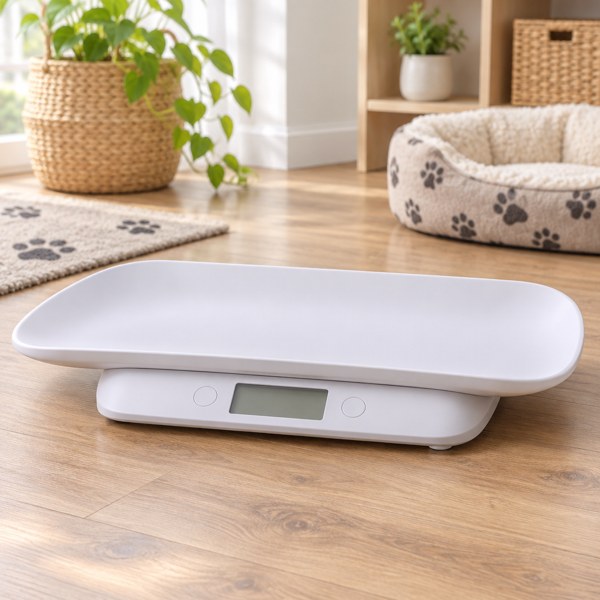
- Weigh your cat regularly. Weight loss often shows up with extra thirst, and a digital pet scale makes it easy to catch small changes. Weighing about once a week, at the same time of day, is plenty.
- Keep a simple log. Write down water amounts, litter clumps, weight, appetite and when you first noticed the change. Bring it to your vet visit.
Top pick
Greater Goods Digital Pet Scale
Pairing your water log with a weekly weigh-in gives your vet a much clearer picture. A simple pet scale makes it easy to notice the slow weight loss that often comes with extra thirst.
- Easy weekly weigh-ins at home
- Spot slow weight loss early
- Useful log for vet visits
How to Help a Thirsty Senior Cat at Home
- Never limit water. A cat drinking more usually needs that water, and cutting back can be dangerous, especially with kidney problems. Always keep fresh water available.
- Offer water in several spots, especially on the floor where your cat spends most of its time, so an older cat with stiff joints doesn’t have to travel far.
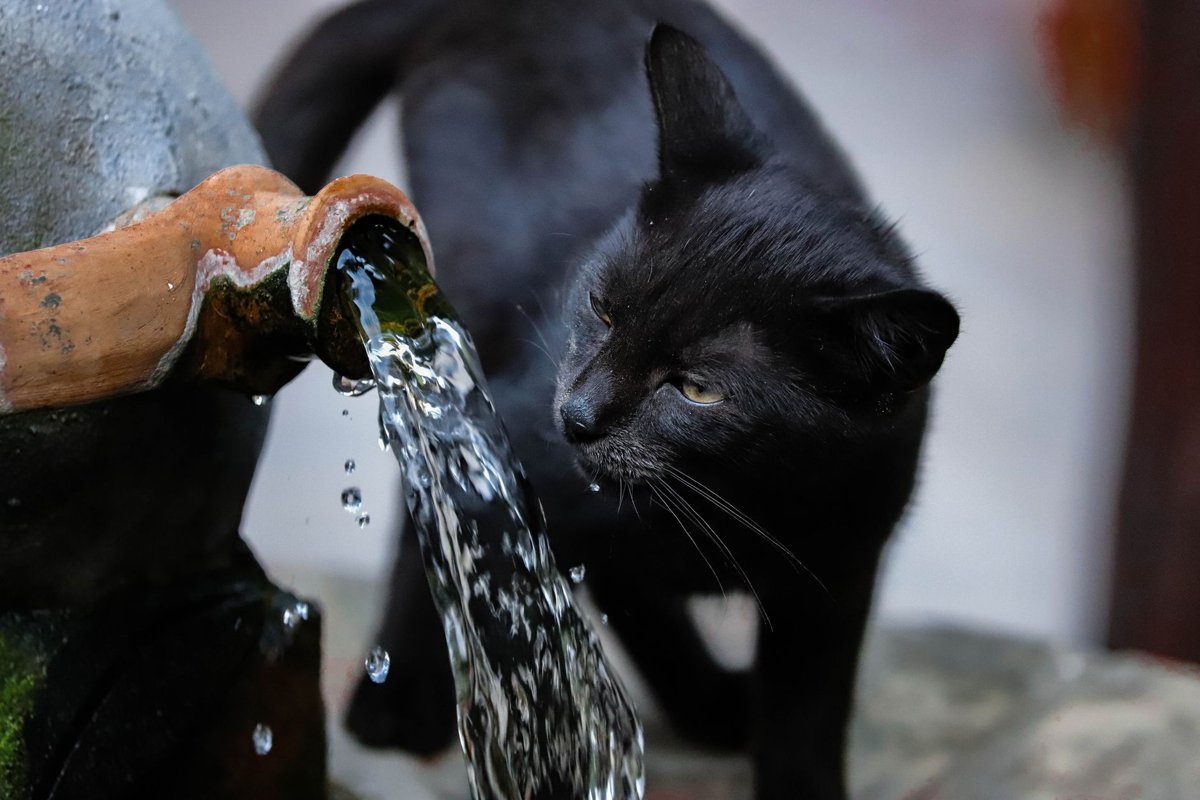
- Try moving water. Many cats like running water, and a cat water fountain can make it easier to keep water fresh and appealing.
- Use wide, shallow bowls. Some cats prefer drinking from a shallow ceramic dish that doesn’t brush their whiskers, and ceramic is easy to keep clean.
- Ask your vet about wet food. Canned food adds moisture to the diet, and our guide to cat nutrition and diet covers the basics. Talk with your vet before making any big diet change, since some conditions need a specific diet.
- Make the litter box easy to use. A cat that pees more needs more space and cleaner litter, so a roomy open litter box and more frequent scooping can help prevent accidents. Many owners add an extra box on each floor, too.
- Keep up with senior checkups. Many vets recommend exams about every 6 months for older cats, since blood and urine tests can find problems before obvious signs appear.
Good to have
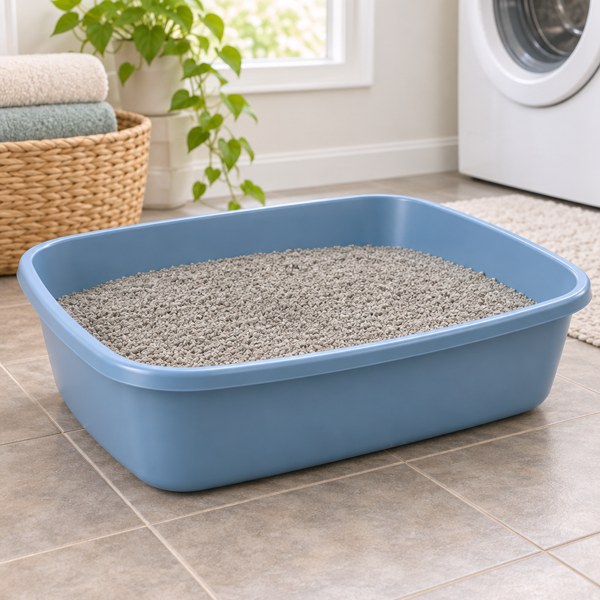
Petmate Giant Open Litter Box
A cat that drinks more will pee more, and a small box fills up fast. A bigger open box gives your senior cat clean space between scoops and can make accidents less likely.
- Extra room for bigger clumps
- Open design, simple to scoop
- Fewer accidents between cleanings
Helpful Products
Also great
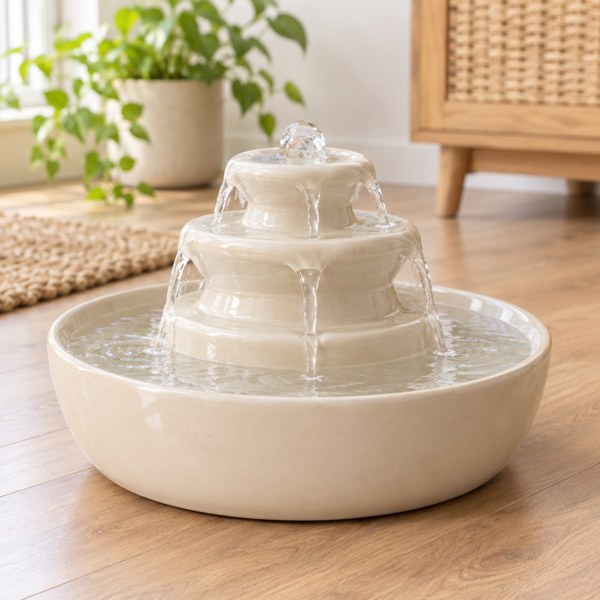
PetSafe Drinkwell Pagoda Ceramic Fountain
This suits senior cats who prefer running water or who drink more and need a steady, fresh supply. The ceramic bowl is easy to wipe clean, and moving water can make drinking more appealing for picky older cats.
- Ceramic bowl is easy to clean
- Moving water appeals to many cats
- Helps keep water fresh all day
Greater Goods Digital Pet Scale
A pet scale lets you track your cat’s weight at home, which pairs well with tracking water.
Petmate Giant Open Litter Box
A big open litter box gives a cat who pees more extra room and makes scooping easier.
ComSaf Wide Shallow Ceramic Cat Bowl
A wide, shallow ceramic bowl is easy to clean and comfortable for cats who dislike deep dishes.
When to Call the Vet
- Book a vet visit within a few days for any senior cat that is clearly drinking or peeing more than usual, even if it seems fine otherwise. Early testing gives the most options.
- Call right away if extra thirst comes with vomiting, weight loss, a poor appetite, hiding or low energy.
- Get emergency care if your cat is straining in the litter box and producing little or no urine. A blocked bladder can become life threatening within hours, and it is especially common in male cats.
- Get emergency care if your cat has not eaten for more than a day, is very weak or wobbly, collapses, or seems suddenly unable to see.
- Never give human medications to try to help. Many common human medicines are toxic to cats, even in small amounts.
Senior Cat Drinking A Lot Of Water FAQ
Is it normal for old cats to drink more water?
Not usually. Some change can come from diet or the weather, but a clear increase in thirst in a senior cat is most often linked to a health issue like kidney disease, an overactive thyroid or diabetes. It is worth a vet visit to find out.
Should I take away my cat’s water if it is drinking too much?
No. Never limit water unless your vet tells you to. A cat drinking more is often making up for water it is losing through extra urine, and restricting it can cause dehydration and make things worse.
Can dry food make my cat drink more?
Yes. Cats on dry food get much less moisture from their meals and drink more to make up for it. If you recently switched from wet to dry food, mention it to your vet, but still get your cat checked, since diet does not explain every case. Our overview of common cat health issues explains more about other possible causes.
What tests will the vet do for a cat drinking a lot of water?
Most vets start with a physical exam, blood work, a thyroid test and a urine test. Many also check blood pressure, since high blood pressure is common in older cats with kidney or thyroid problems.
The Bottom Line
If your senior cat is drinking a lot of water, trust what you are seeing. Measure the water, watch the litter box, weigh your cat if you can, and book a vet visit within a few days. Many of the conditions behind extra thirst, such as kidney disease, hyperthyroidism and diabetes, can be managed for a long time when they are caught early. In the meantime, keep fresh water easy to reach in several places and never cut back on it.
Keep reading: