
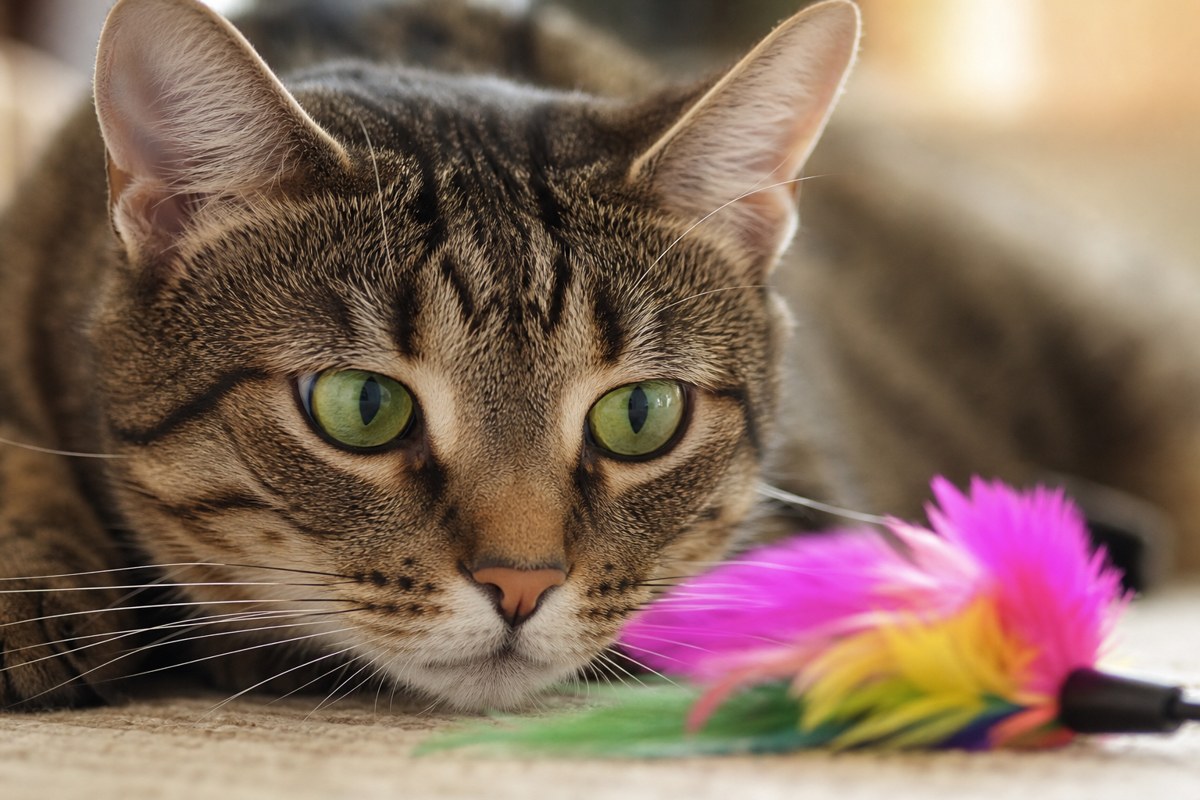
Quick answer: Yes, cats can see color, but not as many as people. Cats see blues and greens best, while reds and pinks look dull or grayish. What cats lack in color, they make up for with excellent night vision and motion detection.
For a long time, people believed cats only saw in black and white. That turned out to be wrong. Cats do see color, just a narrower range than we do.
Cat eyes are built for a different job than ours. They evolved to hunt small, fast prey at dawn and dusk, and nearly everything about how they see reflects that.
How Cat Color Vision Works
Eyes contain two main types of light-sensing cells. Cones detect color and fine detail in bright light. Rods detect light and movement, and work well in dim light.
People have three types of cones (roughly red, green and blue). Cats have fewer cones overall and are thought to see mainly in blues and greens, similar to a person with red-green color blindness. Reds and oranges likely look more like muted greens, grays or browns.
Cat Vision vs. Human Vision
| Cats | People | |
|---|---|---|
| Color range | Mostly blues and greens | Full spectrum |
| Low-light vision | Excellent, needs a fraction of the light we do | Poor |
| Sharpness (detail) | Blurrier, especially far away | Sharper |
| Motion detection | Excellent | Good |
| Field of view | Wider, around 200 degrees | Around 180 degrees |
| Close-up focus | Weak for very close objects | Good |
Why Cats See So Well in the Dark
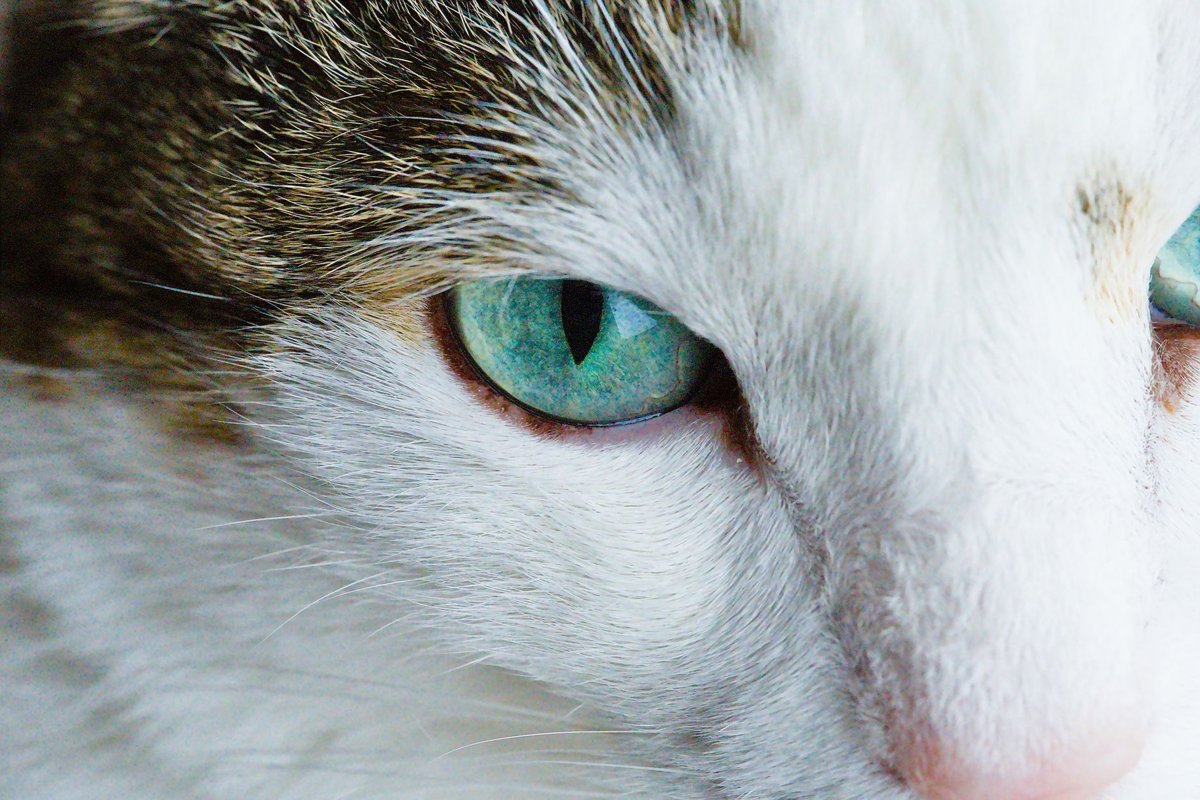
Cats have far more rods than we do, plus a reflective layer behind the retina called the tapetum lucidum. It bounces light back through the retina for a second chance to catch it, which is why cats’ eyes glow in photos and headlights. Their pupils can also open very wide in dim light.
Cats still can’t see in total darkness, though. They rely on whiskers, hearing and smell to fill in the gaps.
What This Means for Toys and Play
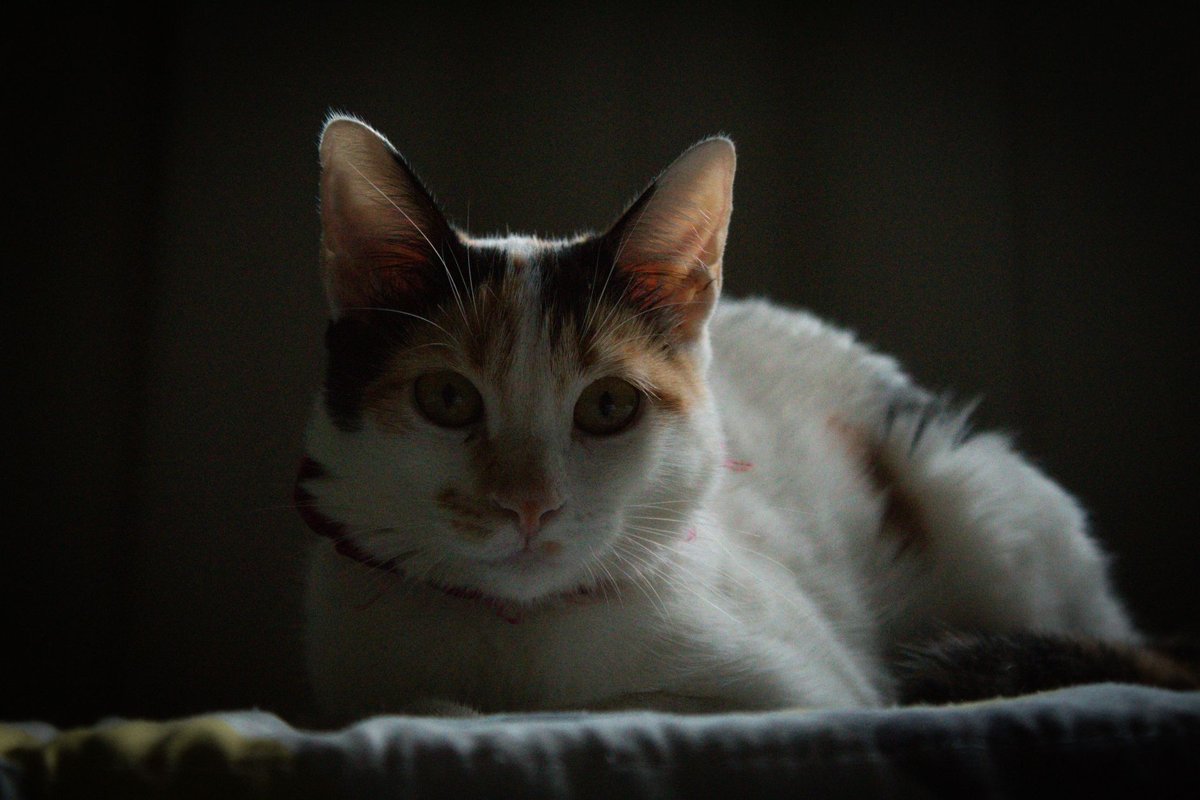
- Movement matters more than color. Wand toys that dart and flutter get more attention than a bright red ball sitting still.
- Blue and green toys may stand out more to your cat than red ones.
- Play at dawn and dusk. Cats are naturally most active then.
- Close-up blur. Cats don’t focus well on things right under their nose, which is why they use their whiskers to ‘feel’ a treat or toy.
Signs of Vision Problems in Cats
- Bumping into furniture or misjudging jumps
- Cloudy eyes, redness, discharge or squinting
- Pupils that stay very large or are different sizes
- Seeming nervous in new places or at night
Sudden vision loss in cats can be linked to high blood pressure, especially in older cats, so call your vet promptly if you notice it.
Helpful Products
- Cat wand toys: Fast, fluttering motion that cats track easily.
- Motion-activated cat toys: Keeps cats chasing when you’re busy.
- Window perches: A front-row seat for bird watching.
Frequently Asked Questions
What colors can cats see best?
Cats are thought to see blues and greens best. Reds and pinks likely look dull or grayish.
Are cats colorblind?
Not completely. They have limited color vision, similar to a person with red-green color blindness.
Can cats see in the dark?
Cats see much better than us in dim light, but they can’t see in total darkness.
Can cats see TV?
Many cats notice movement on screens, especially birds or small animals. Modern screens with higher refresh rates may look smoother to them.
The Bottom Line
Cats do see color, just mainly in blues and greens. Their real superpowers are night vision and spotting motion, so when you pick toys or plan playtime, think movement first and color second.
Keep reading:
- Can Dogs See Color? How Dogs See the World
- Interactive Cat Toys: How to Keep Your Cat Engaged
- Keeping Indoor Cats Happy and Healthy
- Caring for Senior Cats: Life With Our 12-Year-Old Brother-and-Sister Tabbies
As an Amazon Associate, we earn from qualifying purchases. This post contains affiliate links.