
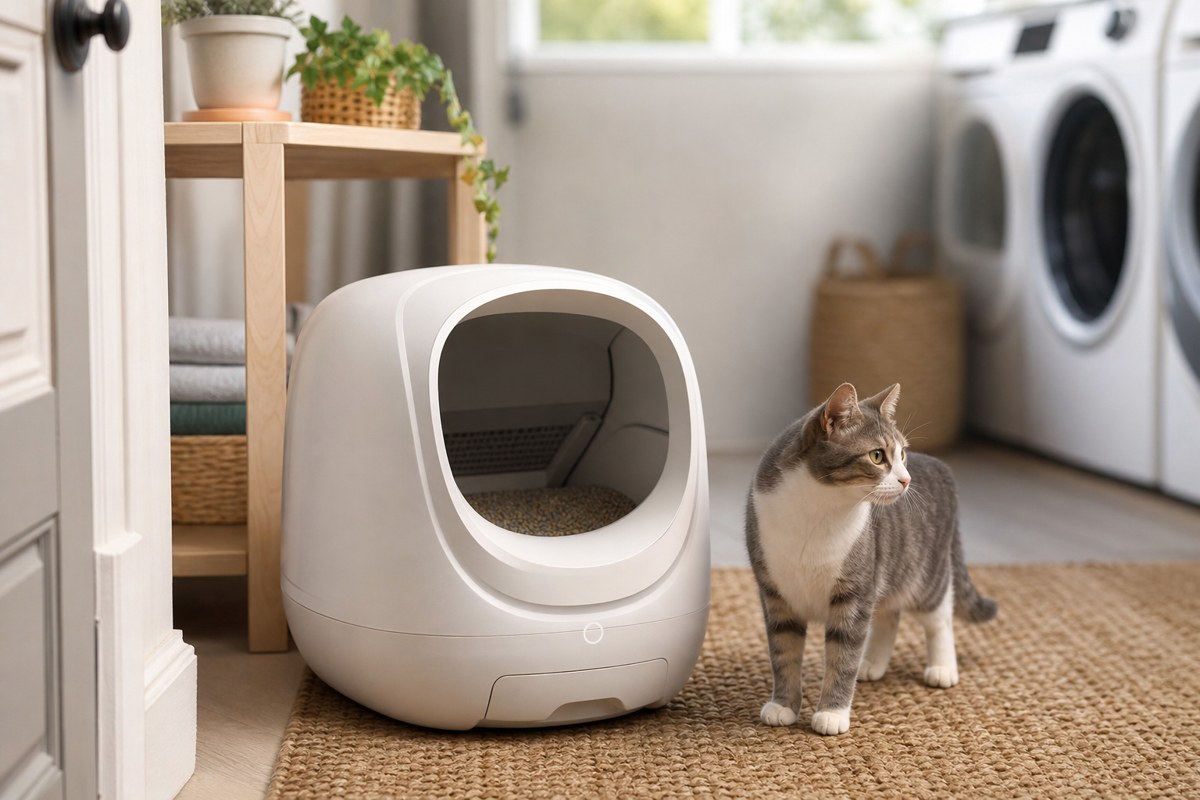
Quick answer: An automatic (self-cleaning) litter box rakes or sifts waste into a sealed bin after your cat leaves, so the box stays cleaner with less scooping. They’re great for busy owners and multi-cat homes, but they’re expensive, can scare some cats, and may not suit kittens, very small cats or seniors with mobility issues.
Scooping the litter box is nobody’s favorite chore. Automatic litter boxes promise to handle it for you, and for many households, they do a good job.
But they’re not right for every cat. Here’s how to decide.
How Automatic Litter Boxes Work
Most use a sensor to detect when a cat has entered and left. After a delay, the box rakes, rotates or sifts the litter, moving clumps into a sealed waste drawer. Some work with regular clumping litter; others need special crystal litter or trays. Many newer models connect to an app that tracks visits.

Pros and Cons
| Pros | Cons |
|---|---|
| Cleaner box between scoops | Expensive upfront, sometimes ongoing supply costs |
| Less odor when emptied regularly | Some cats are scared of the noise or movement |
| Less daily work | Mechanical parts can jam or break |
| Helpful for multi-cat homes | May not suit kittens, tiny cats or cats with mobility issues |
| Some track bathroom visits | Can make it harder to notice changes in urine or stool |
Safety and Comfort Tips
- Check weight limits. Sensors must reliably detect small cats before cycling. Follow the manufacturer’s minimum weight and age guidance.
- Introduce it gradually. Run it in manual mode at first, and keep the old box nearby until your cat uses the new one.
- Keep a regular box available in multi-cat homes, using the guideline of one box per cat plus one.
- Choose a low entry for senior cats.
- Clean and maintain the unit as the manufacturer recommends.

Watch Litter Box Habits Anyway
Litter box changes are some of the earliest signs of illness in cats. More clumps or bigger clumps can mean more peeing, a sign of kidney disease or diabetes. Straining, frequent trips, or peeing outside the box can mean a urinary problem. A male cat straining with little or no urine is an emergency. With an automatic box, check the waste drawer or app regularly so you don’t miss these changes.
Is One Right for You?
- Good fit: busy owners, multi-cat homes, confident adult cats.
- Think twice: kittens, very small cats, nervous cats, seniors with arthritis, or cats with urinary or kidney conditions that need close monitoring.

Helpful Products
- Self-cleaning litter boxes: Less scooping for busy homes.
- Low-entry litter boxes: A simple option for senior cats.
- Unscented clumping litter: Many cats prefer unscented litter.
Frequently Asked Questions
Are automatic litter boxes safe for cats?
Most are when used as directed, but check weight and age limits, especially for kittens and small cats.
Will my cat use an automatic litter box?
Many will with a slow introduction. Keep the old box available during the transition.
Do automatic litter boxes eliminate odor?
They reduce it by removing waste quickly, but the waste drawer still needs emptying regularly.
How many litter boxes do I need?
A common guideline is one per cat plus one extra.
The Bottom Line
Automatic litter boxes can make life easier, but they don’t replace paying attention to your cat. Pick a model that fits your cat’s size and personality, introduce it slowly, and keep an eye on litter habits, which are one of the best early warning signs of illness.
Keep reading:
- Keeping Indoor Cats Happy and Healthy
- Common Cat Health Problems: Causes, Signs and When to See a Vet
- Caring for Senior Cats: Life With Our 12-Year-Old Brother-and-Sister Tabbies
- Complete Cat Care Guide: Tips for Happy and Healthy Cats
As an Amazon Associate, we earn from qualifying purchases. This post contains affiliate links.