
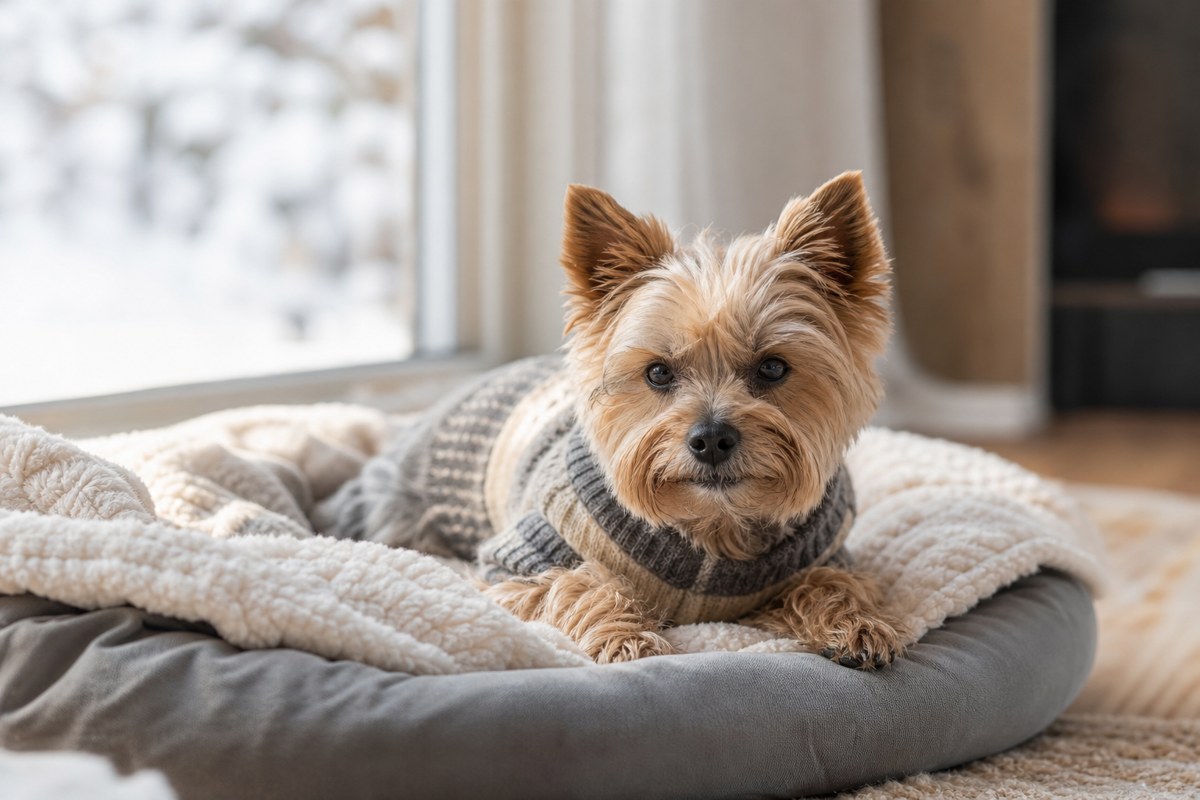
Quick answer: To keep a senior dog warm in winter, give them a thick, raised bed away from drafts, a well-fitted sweater or coat for trips outside, and shorter, more frequent walks during the warmest part of the day. Watch closely for shivering, slowness or cold, pale skin, because older dogs can get too cold faster than younger ones.
As dogs age, they often have a harder time staying warm. Many older dogs lose some muscle and body fat, move around less, and may have health problems that make it harder for their bodies to control temperature. Small breeds, thin-coated dogs and dogs with stiff joints tend to feel it most.
We live in Chicago, so cold months are a big part of our year. This guide covers the simple changes that help an older dog stay cozy indoors and safe outdoors, plus the warning signs that mean your dog is too cold and needs help.
Why Senior Dogs Feel the Cold More
Muscle and body fat act like insulation. Many senior dogs slowly lose muscle as they get less active, so they have less of a buffer against the cold. A thinner coat, which is common with age, makes this worse.
Health conditions matter too. The American Veterinary Medical Association notes that pets with conditions such as diabetes, heart disease, kidney disease or hormonal problems may have a harder time regulating body temperature. If your dog has any ongoing health issue, ask your vet how cold weather might affect them.
Cold can also make arthritis feel worse. Many owners notice their older dog is stiffer and slower to get up on cold mornings. Keeping your dog warm is not only about comfort. It can help them move more easily, too.
Signs Your Senior Dog Is Too Cold
- Shivering or trembling, indoors or out
- Curling up tightly, tucking their tail, or burrowing under blankets more than usual
- Lifting paws off the ground, limping or refusing to keep walking outside
- Whining, looking anxious, or trying to turn back toward home
- Moving slower or seeming stiffer than normal
- Ears, paws or tail that feel very cold to the touch
How to Keep Your Senior Dog Warm at Home
- Raise the bed off the floor. Cold air settles low, and tile or hardwood floors pull heat from the body. A thick orthopedic bed, or a bed on a low platform, keeps your dog off the cold surface and cushions sore joints.
- Move the bed away from drafts. Keep it away from outside doors, big windows and cold exterior walls. A spot in a lived-in room where the family spends time is often warmest and most comforting.
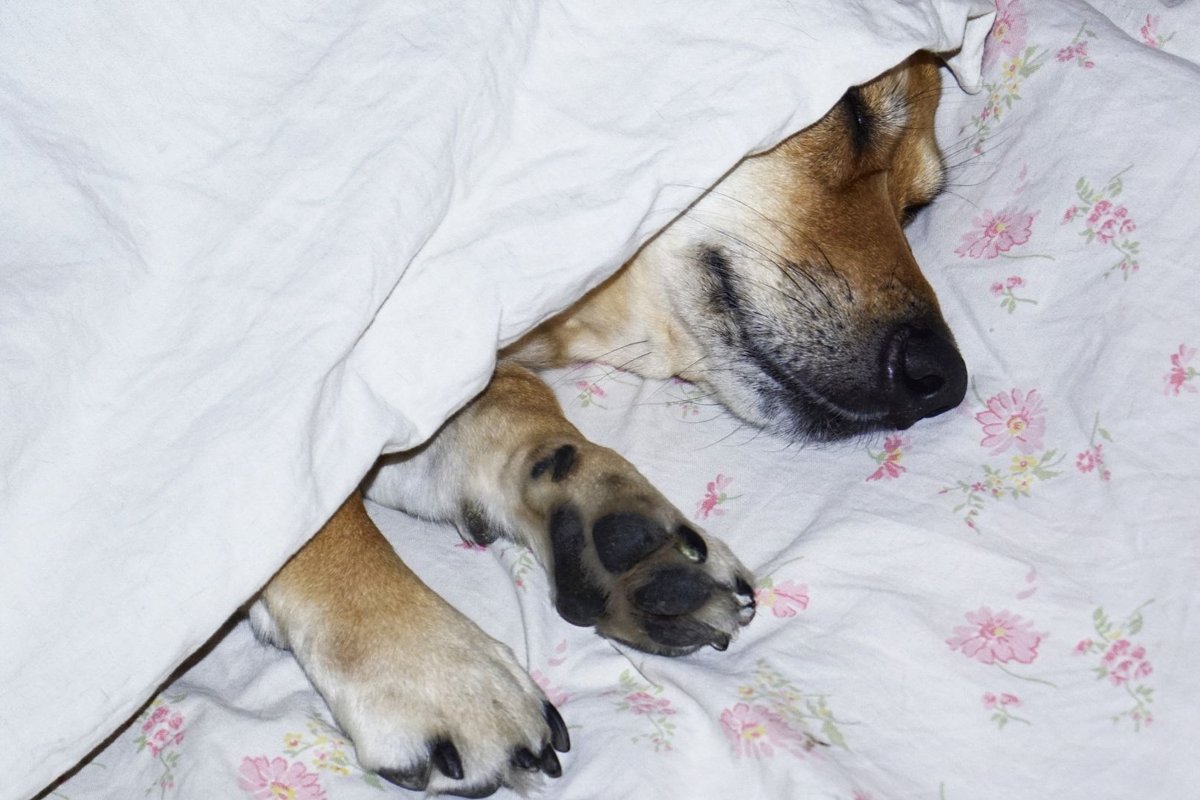
- Add a self-warming pad or blanket. Self-warming pads with a reflective layer bounce your dog’s own body heat back to them and need no electricity. Soft blankets your dog can burrow into help too.
- Be careful with heat sources. Electric heating pads made for people can burn, especially in older dogs who may not move away when it gets too hot. If you use any heated bed, choose one made for pets with low, steady heat, and keep cords out of reach. Keep space heaters and fireplaces behind a barrier so your dog can’t get too close or knock anything over.
- Lay down rugs on slippery floors. Cold, stiff joints and smooth floors are a risky mix. Runners and non-slip rugs give older dogs better footing.
- Keep your home at a steady temperature. If you turn the heat way down at night or while you’re away, think about your dog’s sleeping area. A senior dog may need it a little warmer than you do.
- Dry them off after outdoor trips. A damp coat pulls heat away fast. Towel off snow and wet fur as soon as you come back inside.
K&H Self-Warming Crate Pad
Laid on top of your dog’s regular bed, a pad like this adds gentle warmth with nothing to plug in, so there are no cords or electric heat to worry about.
Safer Winter Walks for Older Dogs
- Go shorter and more often. Several short outings are usually easier on an older dog than one long one. Gentle movement still helps stiff joints, so most dogs benefit from staying lightly active.
- Walk at the warmest time of day. Late morning or early afternoon is often less bitter than early morning or after dark.
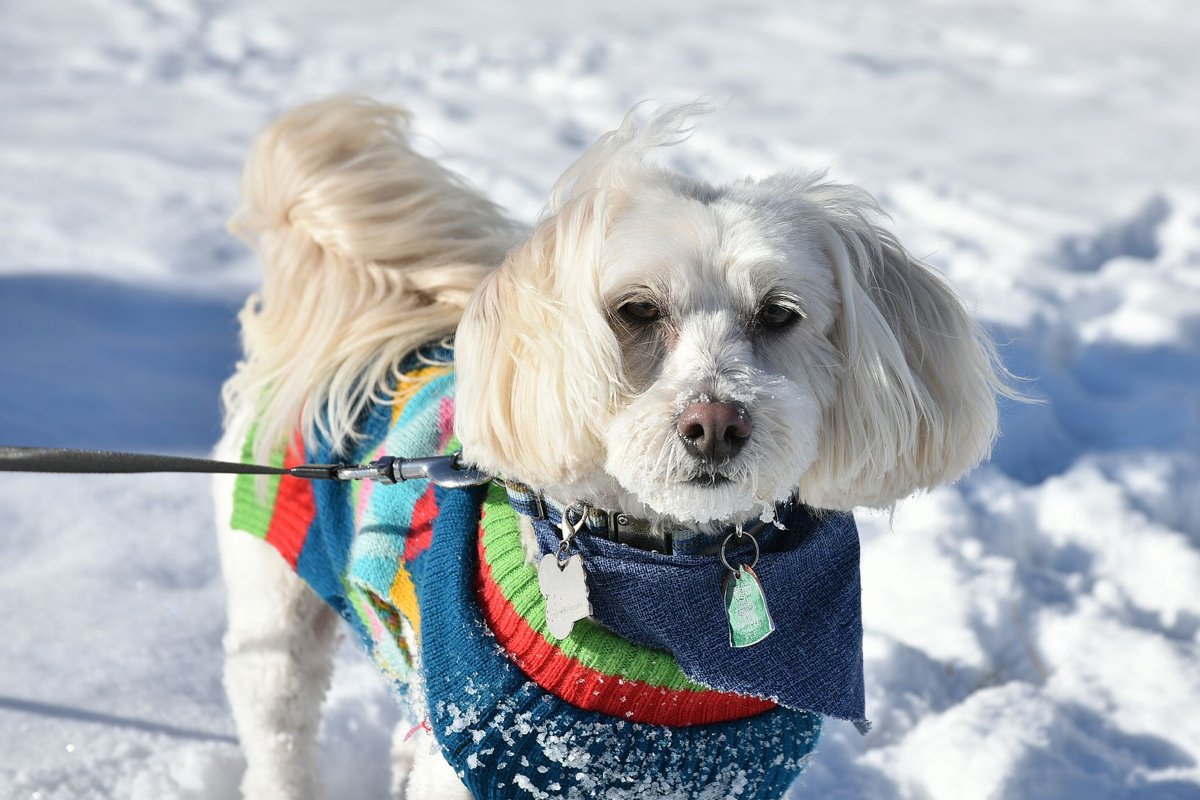
- Use a sweater or coat that fits well. It should cover the chest and belly without rubbing under the legs. Small, short-haired and thin-coated dogs often benefit most. Take it off once you’re back inside so your dog doesn’t overheat.
- Protect paws from ice and salt. Paw wax or dog boots can help. After every walk, wipe paws with a damp cloth to remove salt and de-icing chemicals, which can irritate pads and may make your dog sick if licked off. Check between the toes for ice balls.
- Choose safe footing. Icy sidewalks are a fall risk for older dogs, just as they are for people. Stick to cleared paths, and use a harness for better control and support.
- Watch for antifreeze. Antifreeze tastes sweet to dogs, and even a small amount can be deadly. Keep dogs away from puddles in driveways and garages, and wipe up any spills right away.
Musher's Secret Paw Wax
A thin layer before each walk, plus the wipe-down afterward, makes salty winter sidewalks much easier on older paws.
Sweater, Coat or Nothing? A Quick Guide
| Your dog | What often helps | Things to keep in mind |
|---|---|---|
| Small or toy breed senior | A snug sweater indoors on cold days and a coat outdoors | Small bodies lose heat fast, so keep trips outside short in very cold weather |
| Short-haired or thin-coated senior | A fleece-lined coat or sweater for every outdoor trip in cold weather | Check that it covers the chest and belly |
| Thick double-coated senior (like a Husky) | Often no coat needed, but watch for stiffness | Older thick-coated dogs can still get cold if they are thin or unwell |
| Senior with arthritis | A warm orthopedic bed, a sweater on cold mornings and short walks | Choose clothing that is easy to put on without bending stiff legs too much |
When to Call the Vet
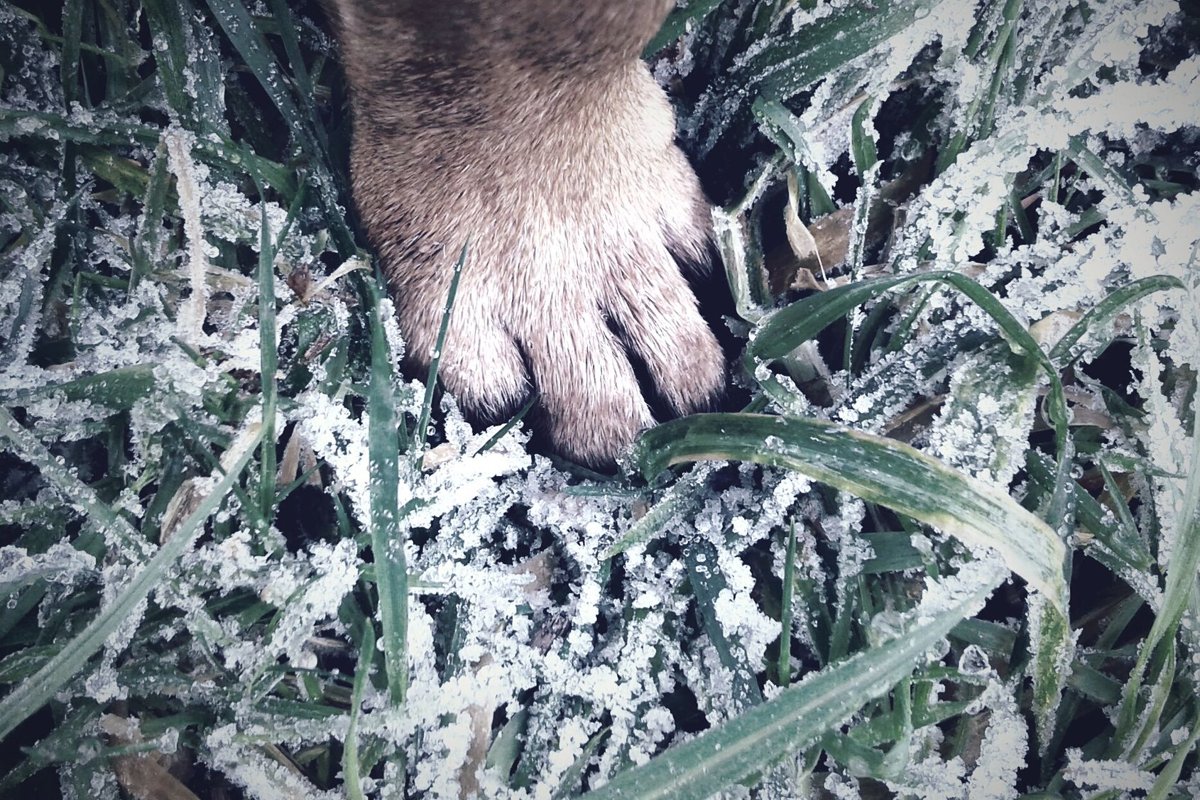
Cold weather can cause two serious problems. Hypothermia is when body temperature drops too low. Early signs include strong shivering, weakness and seeming sluggish. As it gets worse, a dog may stop shivering, become very drowsy or confused, breathe slowly or collapse. Frostbite most often affects the ears, tail and paws. The skin may look pale, gray or bluish and feel cold and hard, then turn red, swollen or painful as it warms.
Get emergency care right away if your dog has stopped shivering but is still cold, seems confused or very weak, collapses, or has skin that looks pale, gray or black. Wrap your dog in a dry, warm blanket and head to the vet. Do not rub frostbitten skin, and do not use a hair dryer, heating pad or hot water, which can damage tissue. Call an emergency vet or a pet poison hotline immediately if you think your dog licked antifreeze, even if they seem fine.
Call your vet soon if your dog seems much stiffer or more painful in cold weather, limps after walks, has cracked or bleeding paw pads, or shivers often indoors. Shivering in a warm house can have other causes, including pain or illness, so it’s worth getting checked. Never give your dog human pain medicine, since many common ones are toxic to dogs.
Helpful Products
Bedsure Orthopedic Bolster Dog Bed
Lifts your dog off cold floors with a supportive foam base and raised sides to lean against.
K&H Self-Warming Crate Pad
Reflects your dog’s own body heat back to them with no cords or electricity to worry about.
Musher's Secret Paw Wax
A wax barrier rubbed onto pads before walks helps protect paws from snow, ice and sidewalk salt.
Fleece-lined dog winter coat
A coat that covers the chest and belly helps small and thin-coated seniors hold heat on walks.
Keep A Senior Dog Warm In Winter FAQ
What temperature is too cold for a senior dog?
There is no single number, because size, coat, weight and health all matter. As a general rule, many small, thin-coated or older dogs start to feel uncomfortable when it drops below about 45°F, and below freezing calls for short trips and extra protection. Watch your dog’s behavior, and ask your vet about your own dog’s limits.
Should my old dog wear a sweater indoors?
Some small or thin-coated senior dogs are more comfortable in a light sweater in a cool house. Make sure it fits well, doesn’t rub, and that your dog can’t get tangled. Take it off if your dog seems warm or starts panting.
Are heating pads safe for senior dogs?
Heating pads made for people can cause burns, especially in older dogs who may not move away when it gets too hot. Self-warming pads that reflect body heat are a safer choice. If you use a heated pet bed, pick one designed for pets with low heat and protected cords.
Why is my senior dog shivering inside the house?
Your dog may simply be cold, but shivering can also be a sign of pain, nausea, anxiety or illness. If warming your dog up doesn’t stop it, or it happens often, call your vet.
The Bottom Line
Older dogs often lose heat faster, so a little extra care in winter goes a long way. A raised, padded bed away from drafts, a well-fitted coat, short walks at the warmest time of day and clean, dry paws keep most seniors comfortable. Learn the warning signs of getting too cold, keep your vet in the loop about any health problems, and your dog can enjoy the cold months safely and cozily.
Keep reading:
- Life With a Senior Yorkie: What 14-Year-Old Gracie Has Taught Us
- How to Choose a Bed for a Small Dog: Warmth, Comfort and Size
- 14 Common Dog Health Problems: Signs to Watch For
- When the Cat Is the Pest: How Our Cats and Dogs Share One Home
As an Amazon Associate, we earn from qualifying purchases. This post contains affiliate links.