
As an Amazon Associate, we earn from qualifying purchases. This post contains affiliate links.
Quick answer: Most senior dogs struggle with stairs because of stiff joints, weaker back legs, fading eyesight or slippery steps. You can usually help by adding traction, supporting your dog with a lift harness, improving lighting, blocking stairs with a gate when you’re not around, and asking your vet to check for pain.
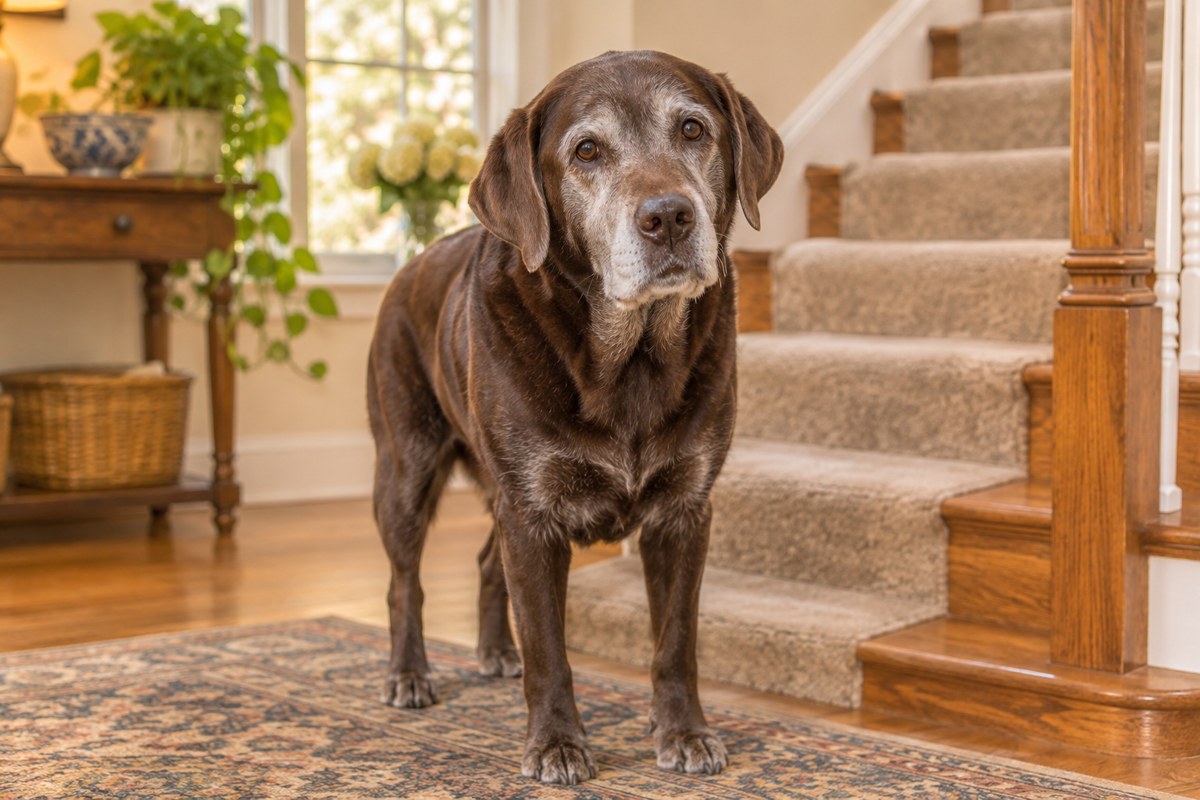
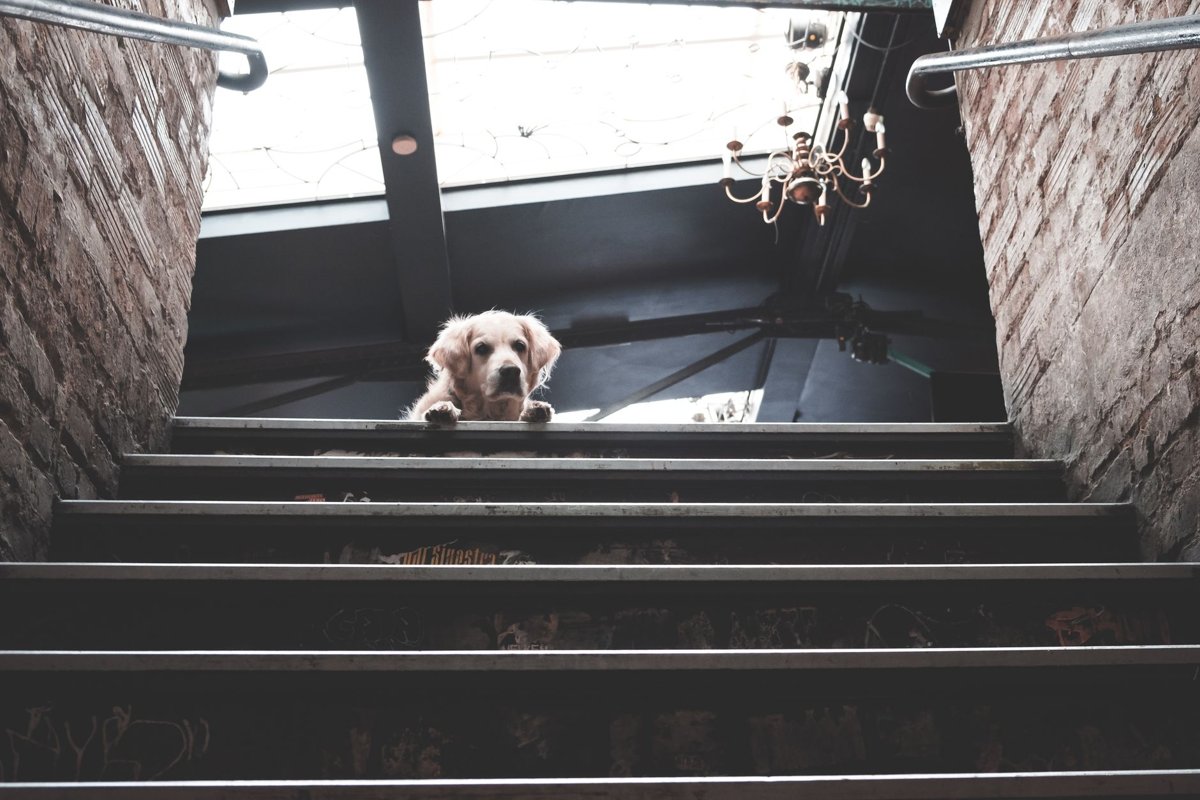
One day your dog runs up the stairs like always. A few months later, they stand at the bottom and stare at you. Stairs are often the first place owners notice that a dog is getting older, because climbing asks a lot from the hips, knees, back and eyes all at once.
The good news is that a few small changes can make stairs much safer, and many senior dogs keep using them for a long time with a little help. Below we cover the signs to watch for, why stairs get hard, simple fixes at home, how to choose between carrying, steps, ramps and gates, and when it’s time to call the vet.
Signs Stairs Are Getting Hard for Your Dog
- Hesitating at the bottom or top of the stairs, or waiting for you before starting.
- Pausing or resting partway up, or taking the steps one at a time instead of in a smooth rhythm.
- Bunny hopping, where both back legs push off together instead of stepping one at a time.
- Slipping, scrambling or catching their toes on the edge of a step.
- Coming down slowly and stiffly, or rushing down in a way that looks out of control.
- Choosing to sleep downstairs when they used to follow you up at night.
- Being extra stiff after a nap, or slow to stand up after lying down.
- Whining, panting or licking their lips at the stairs, which can be signs of worry or discomfort.
Why Old Dogs Struggle With Stairs
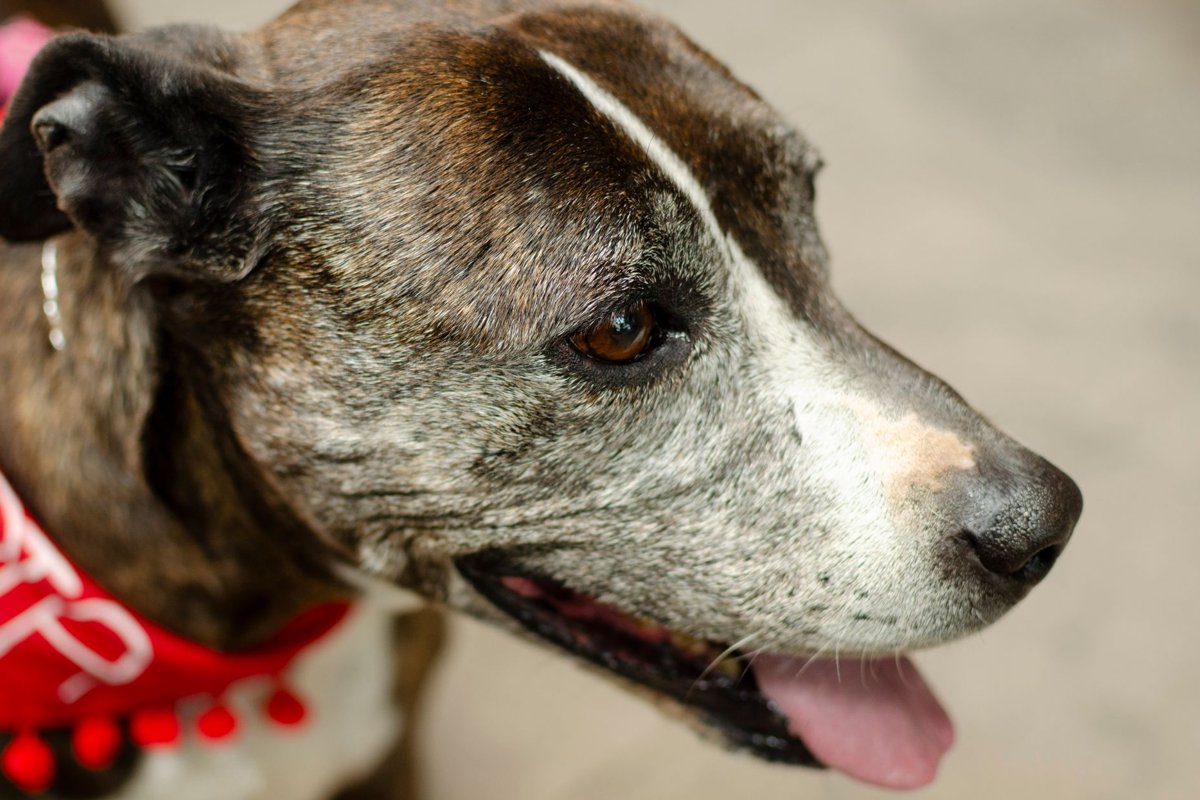
Arthritis is the most common reason. Osteoarthritis is very common in older dogs, and climbing bends the hips, knees and elbows more than walking on flat ground. Going down can be just as hard, because it puts more weight on the front legs and shoulders.
Muscle loss plays a big part too. Many older dogs slowly lose muscle in their back legs, so they have less power to push up each step. Extra body weight makes every step harder on sore joints, which is one reason vets put so much focus on keeping senior dogs lean.
Eyesight and footing matter more than people expect. A dog with cloudy or weaker vision may not judge where each step starts, especially in dim light or on stairs where every step is the same color. Smooth wood stairs, long toenails and fur growing between the paw pads all make slipping more likely.
Sometimes the cause is in the back or nerves. Long-backed breeds like Dachshunds and Corgis are prone to disc problems, and some older dogs develop nerve conditions that cause weak, wobbly back legs. That’s why a vet check matters, especially if the change is sudden.
How to Help Your Senior Dog With Stairs at Home
- Start with a vet visit. Trouble with stairs often means pain, and pain can usually be managed. Your vet can check joints, back and eyes and suggest a plan that fits your dog.
- Add traction to the steps. Smooth stairs are a big hazard. Non-slip stair treads give paws something to grip on wood or laminate steps, and they’re easy to put down.
- Keep nails short and paw fur trimmed. Long nails change how a dog stands, and fur between the pads acts like socks on a slick floor. Some owners also use rubber toe grips for dogs who slide on hard floors.
- Light the stairs well. Turn on the stair light at night or add plug-in night lights. Contrasting tape along the edge of each step can help a dog with weaker vision see where it ends.
- Use a support harness. A lift harness with handles lets you take some of your dog’s weight on the stairs without lifting them by the belly or legs.
- Go slow and stay close. Keep your dog on a short leash so they can’t rush. Many people find it safest to stay just below the dog, so you’re in position to steady them if they slip.
- Block the stairs when you’re away. A baby gate at the top and bottom keeps a dog from trying the stairs alone, especially at night.
- Bring the essentials to one floor. A comfy bed, water and a favorite spot on the main floor means fewer trips. Small pet steps by the couch or bed also stop risky jumps down from furniture.
Help 'Em Up Dog Lift Harness
If you’re helping your dog step by step, a harness with handles lets you steady them without lifting them awkwardly by the belly.
Carry, Harness, Steps or Gate? Choosing What Fits
| Option | Best for | Keep in mind |
|---|---|---|
| Carrying | Small dogs who are unsteady or have fallen before | Support the chest and the back end together. Never lift by the front legs or the scruff. |
| Lift harness | Medium and large dogs who can still walk but need help | Fit it snugly and let your dog get used to it on flat ground first. A support harness works best on wide, clear stairs. |
| Stair treads | Dogs who slip on smooth wood or laminate steps | Pick treads with a grippy backing so they don’t slide. Carpet treads also cut down on noise. |
| Baby gate | Any dog who might try the stairs alone | Use a hardware-mounted gate at the top of stairs, since pressure gates can be pushed loose. |
| Pet steps or a ramp | Getting on and off the couch, bed or car | Steps are compact. Ramps need more room but are easier for dogs who can’t lift their legs well. Wide, carpeted pet steps feel steadier. |
PetSafe CozyUp Folding Pet Steps
For the couch and bed, a set of steps gives smaller dogs a gentle way down so they’re not landing hard on older joints.
Small Dogs vs. Big Dogs: Adjusting Your Approach
For small dogs, a single staircase can be like climbing a ladder. Each step may be close to their own leg length, so many owners of tiny seniors simply carry them. Hold your dog close to your body with one arm under the chest and the other supporting the back end. If your small dog is used to jumping off furniture, steps or a ramp will save their joints from a lot of hard landings.
For large dogs, carrying usually isn’t an option, so the goal is support and footing. A harness with handles near the shoulders and hips lets you help with both ends. Some big dogs mainly need help in the back, and a rear sling or the back handle of a harness can make a big difference. If stairs truly become unsafe, many families set up a bedroom spot on the main floor and save the stairs for when someone can help.

When to Call the Vet
- Call your vet soon if your dog suddenly refuses the stairs, starts limping, or is getting slower on stairs week by week.
- Call your vet soon if your dog yelps, cries or snaps when going up or down, or when you touch their back or legs.
- Get emergency care if your dog suddenly can’t stand, drags their back legs, walks on the tops of their paws (knuckling) or seems wobbly and weak.
- Get emergency care after a fall down the stairs if your dog hits their head, won’t put weight on a leg, or seems dazed or in pain.
- Get emergency care for a hunched back, a dog who won’t lower or turn their head, or trouble controlling pee or poop, which can be signs of a back problem.
- Never give your dog human pain relievers. Many common ones are toxic to dogs, even in small amounts. Your vet can recommend safe options.
Helpful Products
ELOGIO Non-Slip Carpet Stair Treads
Soft treads with a rubber backing give older paws real grip on smooth steps, which is one of the simplest fixes for slipping.
Help 'Em Up Dog Lift Harness
Handles over the shoulders and hips let you share your dog’s weight on stairs and in and out of the car. Measure your dog to choose the right size.
Dr. Buzby's ToeGrips for Dogs
Small rubber rings that slip over the toenails to help dogs who slide on hardwood or tile. Ask your vet if they suit your dog.
PetSafe CozyUp Folding Pet Steps
Folding steps that help smaller dogs get on and off the couch or bed without jumping, and fold away when guests come over.
Senior Dog Stairs FAQ
Should old dogs use stairs at all?
Many senior dogs can keep using stairs safely with good footing, good light and some help. If your dog has fallen, is very unsteady or has a back problem, your vet may suggest limiting stairs. A gate and a comfy main-floor setup make that easy.
Is a ramp or stairs better for an old dog?
It depends on the dog. Pet steps take up less space and work well for dogs who can still lift their legs. Ramps are often easier for dogs with stiff hips or weak back legs, but they need more room and a gentle slope. For indoor furniture, sturdy pet steps with a carpeted surface are a good place to start.
How do I get my old dog to go down the stairs?
Go slowly with your dog on a short leash, stay just below them, and use treats to reward each calm step. A lift harness helps you take some weight off the front legs, which do most of the work going down. If your dog seems scared or sore, ask your vet before pushing them.
Why is my senior dog suddenly afraid of the stairs?
A sudden change often means pain, a slip that scared them, or a change in eyesight. Check that the steps aren’t slick and add stair treads if needed, but also call your vet, since sudden reluctance can point to joint, back or nerve problems that need a look.
The Bottom Line
Stairs are hard work for an aging body, and struggling with them is common in senior dogs. Start with a vet visit to rule out pain, then make the stairs easier: add grip, trim nails and paw fur, light the steps, use a harness for support and block the stairs when you’re not there to help. With a few changes like these, many older dogs stay safe, comfortable and close to their people.
Keep reading: