
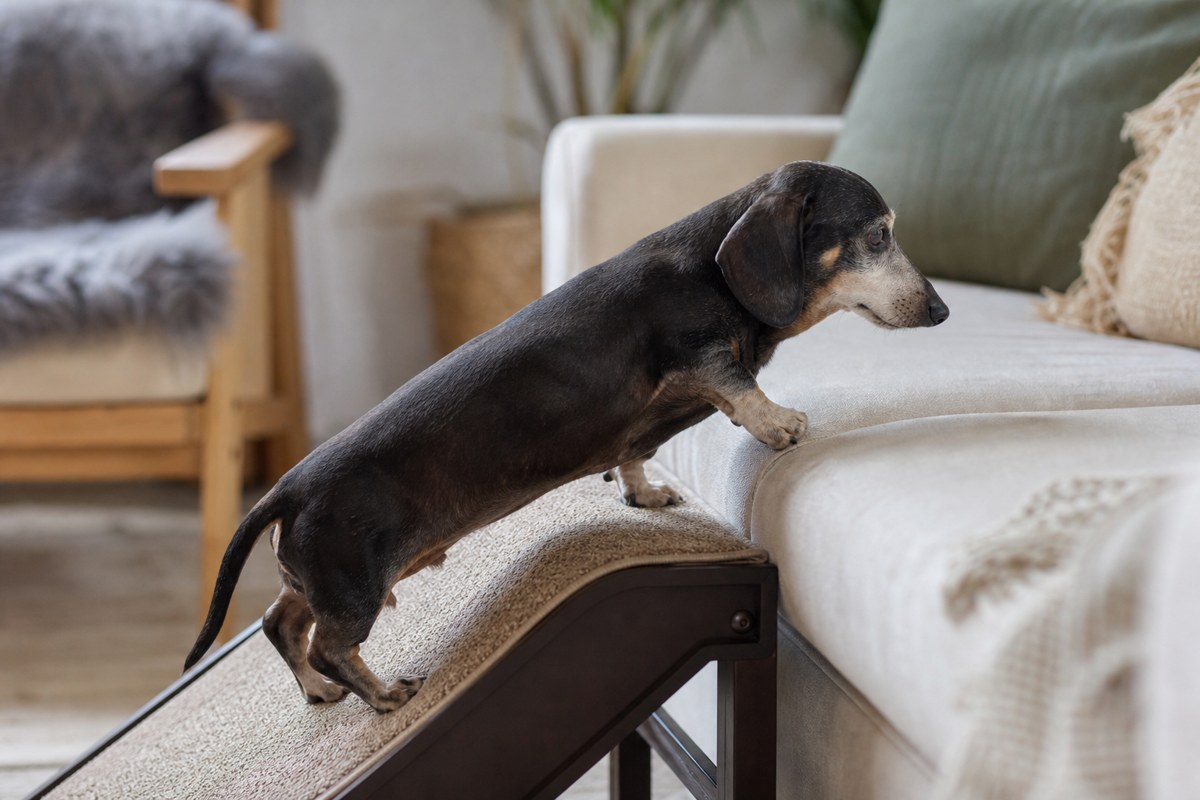
Quick answer: Ramps are usually best for dogs with arthritis, back problems or very short legs, since there’s no stepping up. Stairs take up less space and work well for dogs who can still climb. Either way, look for a gentle slope or shallow steps, a non-slip surface and a sturdy build.
Jumping on and off furniture or in and out of the car puts a lot of force on a dog’s joints and back. For senior dogs, small breeds and long-backed dogs like Dachshunds, that strain adds up, and a bad landing can cause a real injury.
Pet ramps and stairs give them a safer way up. Here’s how to decide which one fits your dog and your home.
Ramps vs. Stairs at a Glance
| Ramps | Stairs | |
|---|---|---|
| Best for | Arthritis, back problems, very short legs, post-surgery | Dogs who can still climb steps comfortably |
| Space needed | More, since a gentle slope needs length | Less |
| Learning curve | Some dogs are nervous at first | Most dogs pick them up quickly |
| Car use | Folding ramps work well for SUVs | Usually indoor only |

What to Look For
- A gentle slope. A steep ramp is almost as hard as jumping. Longer ramps make a gentler incline.
- Shallow, deep steps on stairs, so your dog’s whole body fits on each step.
- Non-slip surface like carpet or textured rubber.
- Sturdy build that doesn’t wobble or slide, with a weight rating above your dog’s weight.
- Side rails or raised edges for dogs with poor vision or balance.
- The right height to match your bed or couch, so the top lines up with where your dog lands.
Which Dogs Benefit Most
- Senior dogs with stiff joints or arthritis
- Small breeds prone to knee problems, like Yorkies, Chihuahuas and Pomeranians
- Long-backed breeds like Dachshunds and Corgis, which are prone to back disc problems
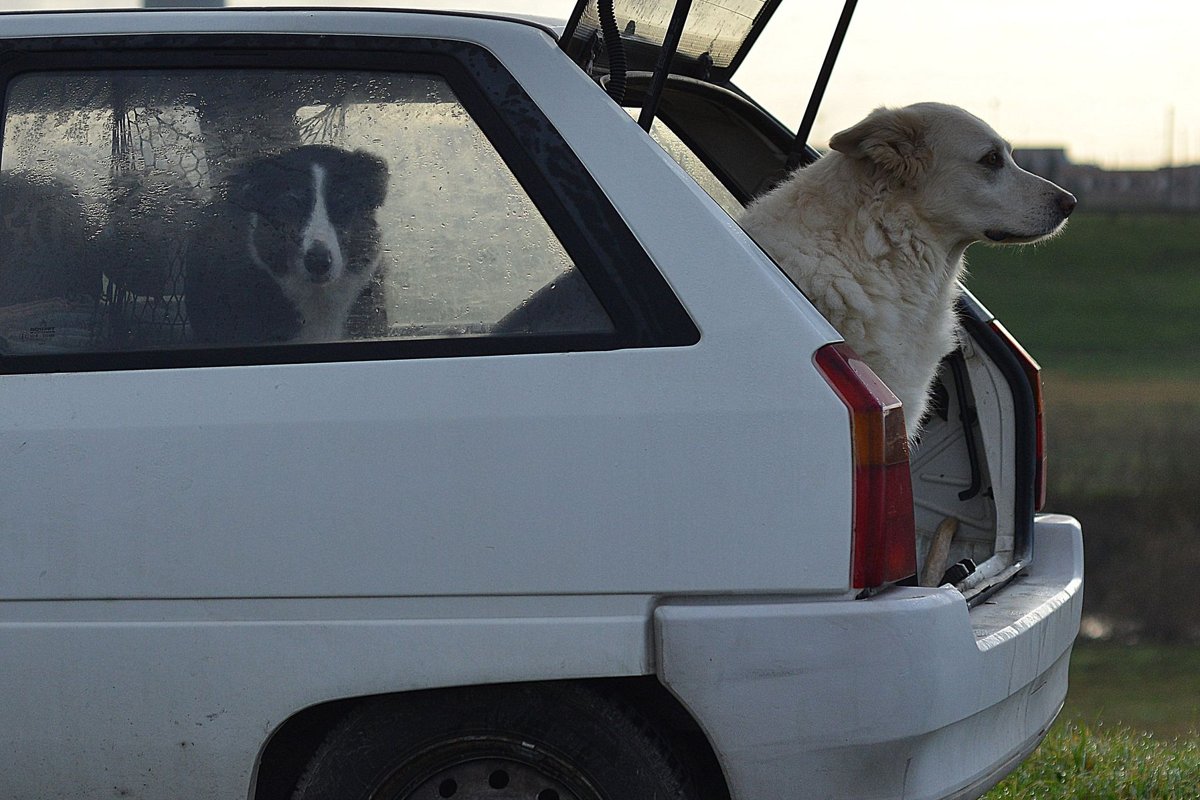
- Large dogs getting in and out of cars
- Dogs recovering from surgery (follow your vet’s activity instructions)

How to Teach Your Dog to Use a Ramp or Stairs
- Lay the ramp flat on the floor first, or start with just the bottom step.
- Use treats to lure your dog across, one step at a time.
- Raise it gradually over several short sessions.
- Keep a hand near your dog for support at first.
- Block the old jumping spot so the ramp or stairs become the easy choice.
When to Talk to Your Vet
If your dog suddenly stops jumping, cries when picked up, walks hunched over, or drags or wobbles on their back legs, call your vet promptly. Sudden weakness or wobbliness in the back legs, especially in long-backed breeds, can be a sign of a back problem that needs urgent care.
Helpful Products
- Pet ramps for beds and couches: A gentle slope for dogs with joint or back problems.
- Foam pet stairs: Lightweight steps for small dogs and cats.
- Folding car ramps: Helps big or senior dogs into SUVs and trucks.
Frequently Asked Questions
Is a ramp or stairs better for an old dog?
Ramps are often better for dogs with arthritis or back problems, since there’s no stepping up. Stairs work well for dogs who can still climb comfortably.
How steep should a dog ramp be?
The gentler the better. Longer ramps create a lower incline, which is easier on joints.
Are dog stairs good for Dachshunds?
Many vets recommend ramps for Dachshunds and other long-backed breeds because they’re prone to back problems. Ask your vet what’s best for your dog.
How do I get my dog to use a ramp?
Start with it flat, use treats, raise it gradually and keep sessions short and positive.
The Bottom Line
A ramp or a set of stairs is a small investment that can save your dog from painful jumps and injuries. Choose a ramp for dogs with joint or back problems, stairs for dogs who still climb well, and take a few days to teach your dog to use it.
Keep reading:
- Life With a Senior Yorkie: What 14-Year-Old Gracie Has Taught Us
- How to Choose a Bed for a Small Dog: Warmth, Comfort and Size
- 14 Common Dog Health Problems: Signs to Watch For
- Cat Trees for Senior and Large Cats: What to Look For
As an Amazon Associate, we earn from qualifying purchases. This post contains affiliate links.