
Quick answer: Hairballs form when cats swallow loose fur while grooming and it collects in the stomach instead of passing through. An occasional hairball can be normal, especially in long-haired cats. Frequent hairballs (more than about once or twice a month), or retching with nothing coming up, are worth a vet visit.
Few sounds get a cat owner off the couch faster than the hack-hack-hack of a cat about to bring up a hairball.
Cats spend a big part of their day grooming, and their tongues are covered in tiny backward-facing barbs that pull out loose fur. Most of that fur passes through the digestive tract. Sometimes it doesn’t.
Why Hairballs Happen
- Long-haired breeds like Persians and Maine Coons swallow more fur.
- Shedding season means more loose hair.
- Overgrooming from stress, allergies, fleas or skin problems.
- Slower gut movement, which can happen with some digestive problems and in older cats.
How Often Is Normal?
Many vets now say that while an occasional hairball can happen, frequent hairballs aren’t simply ‘something cats do.’ They may point to overgrooming or an underlying digestive problem like inflammatory bowel disease. Vomiting more than about once or twice a month, hairball or not, is worth discussing with your vet.

How to Reduce Hairballs
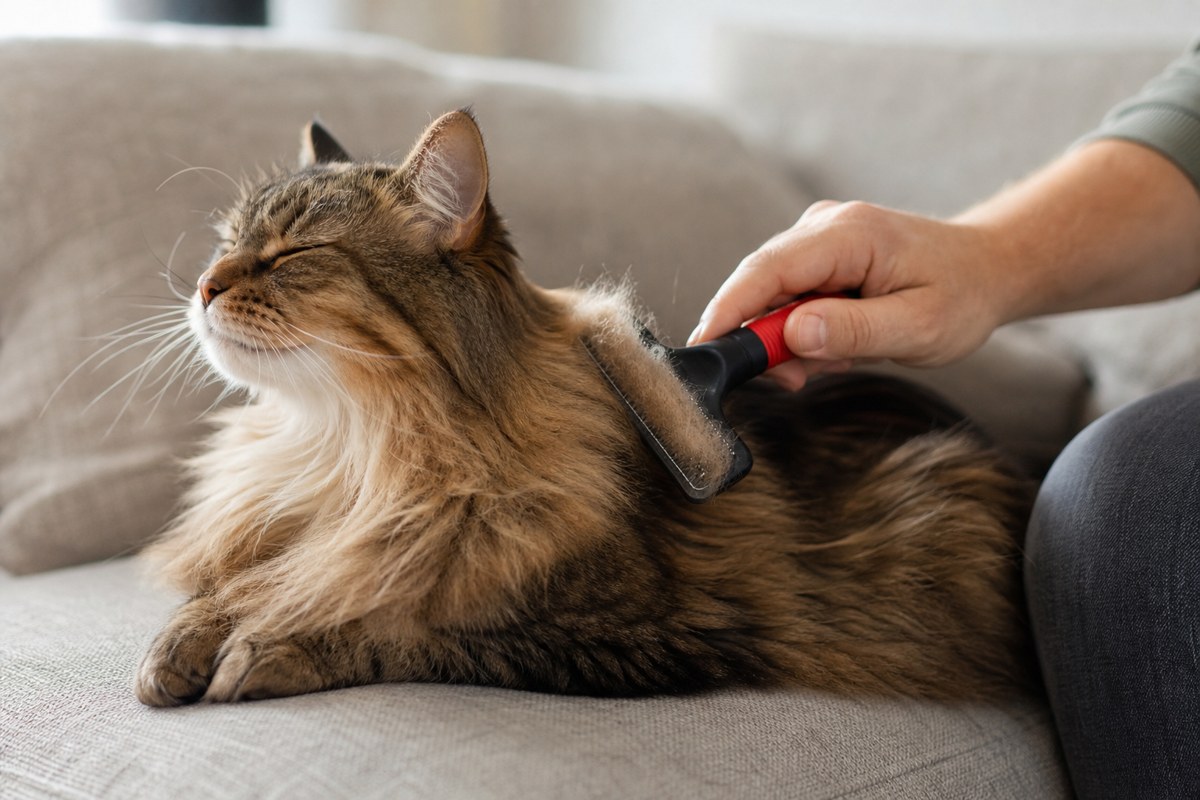
- Brush your cat regularly. Daily for long-haired cats, a few times a week for short-haired cats. Every bit of fur in the brush is fur your cat doesn’t swallow.
- Ask your vet about a hairball-control diet, usually with extra fiber to help fur move through.
- Keep your cat hydrated with fresh water, a fountain, and wet food.
- Reduce stress and boredom with play and enrichment to prevent overgrooming.
- Keep up with flea prevention so itching doesn’t lead to extra grooming.
- Ask your vet before using hairball gels or laxatives, especially for cats with health conditions.

Warning Signs: When to Call the Vet
Hairballs can occasionally cause an intestinal blockage, which is an emergency. Call your vet promptly if your cat:
- Retches or gags repeatedly without bringing anything up
- Vomits several times in a day
- Stops eating, or eats less for more than a day
- Is lethargic or hiding
- Has a swollen or painful belly
- Is constipated or has diarrhea
- Has frequent hairballs or is losing weight
Repeated retching can also be confused with coughing. Coughing in cats can be a sign of asthma, so a video for your vet can help tell them apart.
Helpful Products
- Cat deshedding brushes: Removes loose fur before your cat swallows it.
- Cat water fountains: Encourages drinking, which helps digestion.
- Grooming gloves: Easy brushing for cats who dislike combs.
Frequently Asked Questions
How often should a cat throw up a hairball?
An occasional hairball can be normal. More than about once or twice a month is worth talking to your vet about.
Can hairballs be dangerous?
Rarely, a hairball can cause a blockage. Repeated unproductive retching, not eating and lethargy are warning signs.
Do short-haired cats get hairballs?
Yes, though usually less often than long-haired cats.
Is my cat coughing or bringing up a hairball?
They can look alike. Cats with hairballs usually bring something up eventually. Repeated coughing without results can be asthma, so see your vet.
The Bottom Line
Hairballs are a side effect of a cat’s careful grooming, but they shouldn’t be frequent. Brush regularly, keep your cat hydrated and relaxed, and call your vet if hairballs become common or your cat retches without bringing anything up.
Keep reading:
- Why Do Cats Vomit? Common Causes and When to Call the Vet
- Complete Cat Care Guide: Tips for Happy and Healthy Cats
- Caring for Senior Cats: Life With Our 12-Year-Old Brother-and-Sister Tabbies
- Cat Nutrition Basics: What to Feed for Optimal Health
As an Amazon Associate, we earn from qualifying purchases. This post contains affiliate links.