
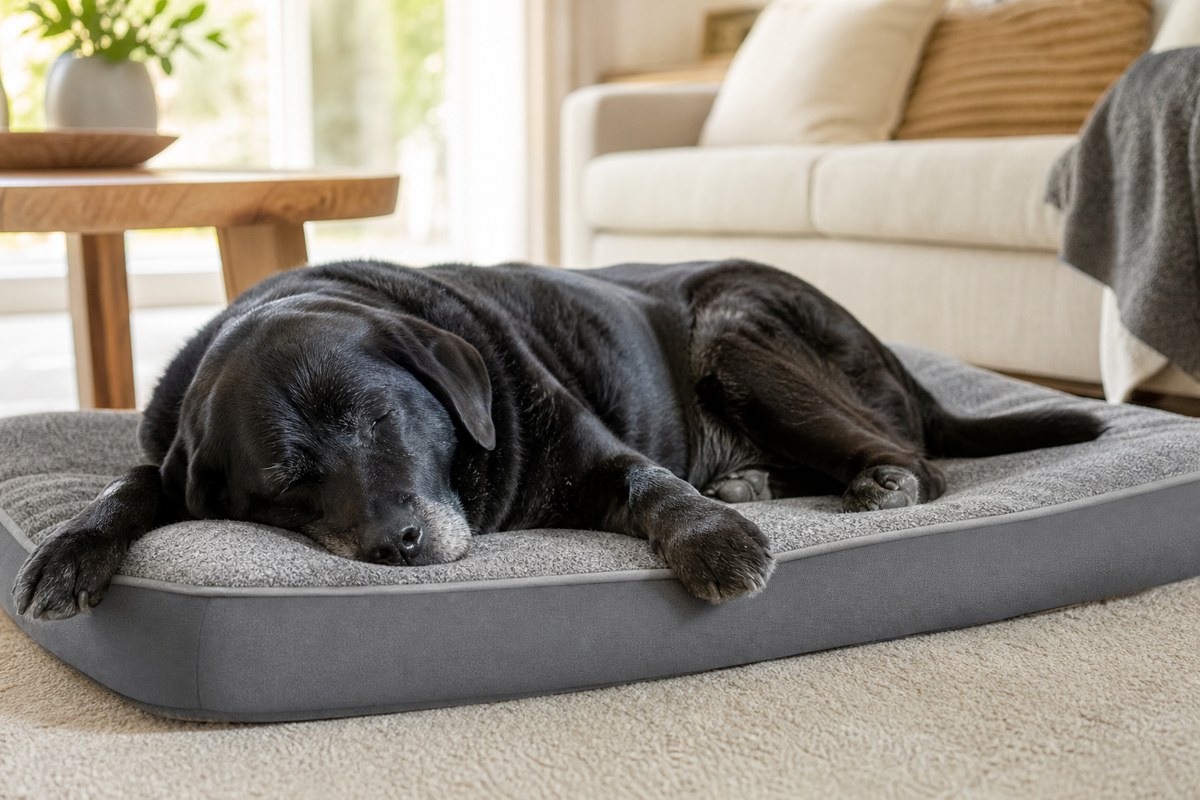
Quick answer: Big dogs need a bed with thick, supportive foam (often orthopedic or memory foam) that doesn’t flatten under their weight, enough room to fully stretch out, and a durable, washable cover. Measure your dog sleeping, then add several inches.
Large and giant breeds spend a lot of their day sleeping, and all that weight presses down on their joints. A thin, cheap bed flattens fast and leaves a big dog basically lying on the floor.
Big breeds are also more prone to joint problems like hip and elbow dysplasia and arthritis as they age, so good support matters even more. Here’s what to look for.
Measure Your Dog First
Measure your dog from nose to the base of the tail while lying stretched out, then add about 6 to 12 inches. If your dog sleeps curled up, a round or bolster bed may work, but most large dogs sprawl at least some of the time.
Check the weight rating too. A bed rated for a 50-pound dog won’t hold up under a 100-pound one.
Types of Large Dog Beds
| Bed type | Best for | Trade-offs |
|---|---|---|
| Orthopedic or memory foam | Seniors, heavy dogs, joint problems | Higher cost, quality varies a lot |
| Bolster beds | Dogs who like to lean or rest their head | Bolsters take up sleeping space |
| Elevated cot beds | Dogs who run hot, outdoor use | Less cushioning for achy joints |
| Pillow or stuffed beds | Budget, young healthy dogs | Flatten and clump quickly under big dogs |
| Cooling beds | Thick-coated breeds, hot climates | Not as warm in winter |
What to Look For
- Foam thickness and density. For large dogs, many owners look for at least 4 inches of supportive foam. Your dog shouldn’t sink through to the floor.
- Removable, washable cover. Big dogs mean big messes.
- Waterproof liner to protect the foam from accidents and drool.
- Durable fabric if your dog likes to dig or chew. No bed is truly chew-proof, though.
- Non-slip bottom so the bed doesn’t slide on hard floors.
- Low entry height for older dogs who struggle to step up.

Signs It’s Time for a New Bed
- The bed stays flat or has a permanent dent
- Your dog chooses the floor or couch instead
- You can feel the floor through the middle
- It smells even after washing
- Your dog is stiff after getting up
Stiffness, trouble getting up and reluctance to lie down can also be signs of arthritis or pain. Mention them to your vet.
Where to Put It
Place the bed somewhere quiet but close to the family, away from drafts and hot vents. Many dogs like a bed in the bedroom and one in the main living area. If your floors are slippery, put the bed on a rug so your dog can get up and down safely.

Helpful Products
- Orthopedic beds for large dogs: Thick, supportive foam for heavy dogs and stiff joints.
- Waterproof dog bed liners: Protects the foam from accidents and drool.
- Elevated cooling cots: Good for dogs who run hot.
Frequently Asked Questions
What size bed does a large dog need?
Measure your dog stretched out from nose to tail base and add 6 to 12 inches. Many large breeds need an XL or jumbo bed.
Are orthopedic beds worth it for big dogs?
For heavy dogs and seniors, a quality orthopedic bed can make a real difference in comfort. Check that the foam is thick and dense enough not to flatten.
How often should I replace my dog’s bed?
When it stays flat, smells after washing, or your dog stops using it. Quality foam beds usually last longer than stuffed beds.
Why won’t my dog use his new bed?
Try putting a worn T-shirt or their old blanket on it, and place it where they already like to sleep. Some dogs just need a few days.
The Bottom Line
A large dog’s bed should support their weight, give them room to stretch and stand up to daily use. Measure first, choose thick supportive foam, and replace it once it stops doing its job.
Keep reading:
- The Ultimate Guide to Dog Beds: Finding the Perfect Fit
- How to Choose a Bed for a Small Dog: Warmth, Comfort and Size
- Pet Ramps vs. Pet Stairs: How to Choose for Senior and Small Dogs
- 14 Common Dog Health Problems: Signs to Watch For
As an Amazon Associate, we earn from qualifying purchases. This post contains affiliate links.