
Quick answer: Cats commonly vomit from eating too fast, hairballs, food changes or eating something they shouldn’t (like plants or string). Frequent vomiting is not normal, though, and can point to food sensitivities, inflammatory bowel disease, kidney or thyroid disease, and more. Vomiting more than about once or twice a month deserves a vet visit.
Most cat owners have stepped in it at least once. Cats vomit more easily than many animals, and for a long time people assumed it was just ‘what cats do.’
Vets now see it differently. Occasional vomiting can happen, but regular vomiting is a symptom worth investigating, especially in senior cats.
Vomiting vs. Regurgitation
| Vomiting | Regurgitation | |
|---|---|---|
| What happens | Active heaving from the belly | Passive, food comes back up with little effort |
| Timing | Any time | Often right after eating |
| Looks like | Partly digested food, liquid or bile | Undigested food, often tube-shaped |
| Common cause | Many, from hairballs to illness | Eating too fast, esophagus problems |
Common Causes
- Eating too fast, often called ‘scarf and barf.’
- Hairballs.
- Sudden diet changes.
- Food sensitivities or allergies.
- Eating plants, string, ribbon or hair ties. String-type objects are dangerous and need a vet immediately.
- Toxins, including lilies (extremely toxic to cats), some houseplants and household chemicals.
- Parasites or infections.
- Chronic disease such as inflammatory bowel disease, kidney disease, hyperthyroidism, diabetes, liver disease or pancreatitis, which become more common with age.
What You Can Do at Home
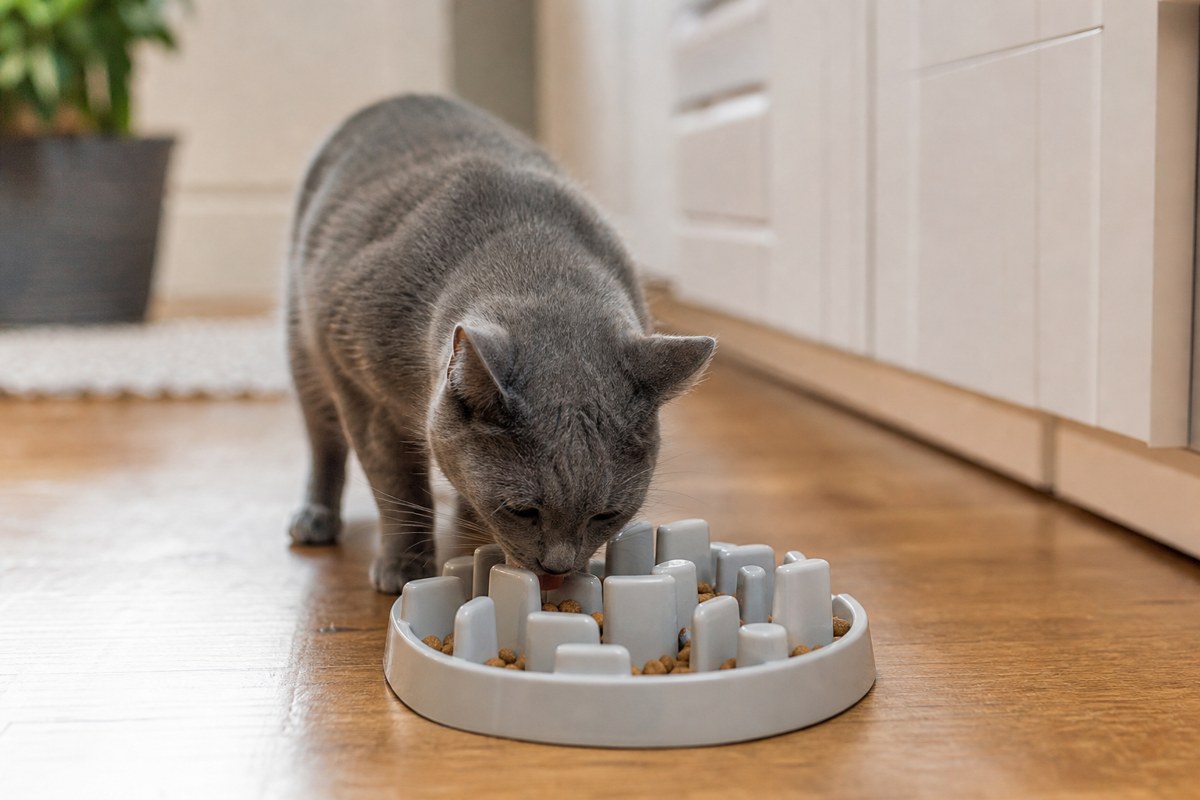
- Slow down fast eaters with a slow feeder, puzzle feeder or smaller, more frequent meals.
- Change foods gradually over 7 to 10 days.
- Brush regularly to reduce hairballs.
- Remove temptations like string, ribbon, rubber bands and toxic plants.
- Keep a log of when vomiting happens, what it looks like, and what your cat ate. This helps your vet a lot.
When to Call the Vet
Call your vet the same day, or go to an emergency vet, if your cat:
- Vomits several times in one day, or can’t keep water down
- Has blood in the vomit, or vomit that looks like coffee grounds
- Is lethargic, hiding or weak
- Has a painful or swollen belly
- Hasn’t eaten in 24 hours (cats can develop serious liver problems if they stop eating)
- May have eaten string, a toy, a lily or anything toxic
- Is also having diarrhea, weight loss or drinking much more water
For vomiting that’s not urgent but happens regularly, schedule a regular vet visit. Bloodwork can catch problems like kidney disease and hyperthyroidism early.
Helpful Products
- Slow feeder cat bowls: Helps prevent ‘scarf and barf.’
- Cat puzzle feeders: Slows eating and adds enrichment.
- Enzymatic pet stain cleaner: Cleans up vomit stains and odors.
Frequently Asked Questions
Is it normal for cats to throw up once a week?
No. Vomiting weekly is more than vets consider normal and is worth a checkup.
Why does my cat throw up right after eating?
Often from eating too fast. A slow feeder or smaller meals can help. If it continues, see your vet.
Why is my cat throwing up yellow liquid?
Yellow fluid is usually bile, often seen when the stomach is empty. If it happens often, talk to your vet.
Why does my senior cat vomit more?
Older cats are more prone to conditions like kidney disease, hyperthyroidism and IBD, which can cause vomiting. A vet check with bloodwork is a good idea.
The Bottom Line
Cats may vomit occasionally, but frequent vomiting is a symptom, not a personality trait. Slow down fast eaters, brush often, keep dangerous items out of reach, and get your vet involved when vomiting becomes a pattern or comes with other signs of illness.
Keep reading:
- Why Do Cats Throw Up Hairballs? How Often Is Normal
- Caring for Senior Cats: Life With Our 12-Year-Old Brother-and-Sister Tabbies
- Common Cat Health Problems: Causes, Signs and When to See a Vet
- Cat Nutrition Basics: What to Feed for Optimal Health
As an Amazon Associate, we earn from qualifying purchases. This post contains affiliate links.