
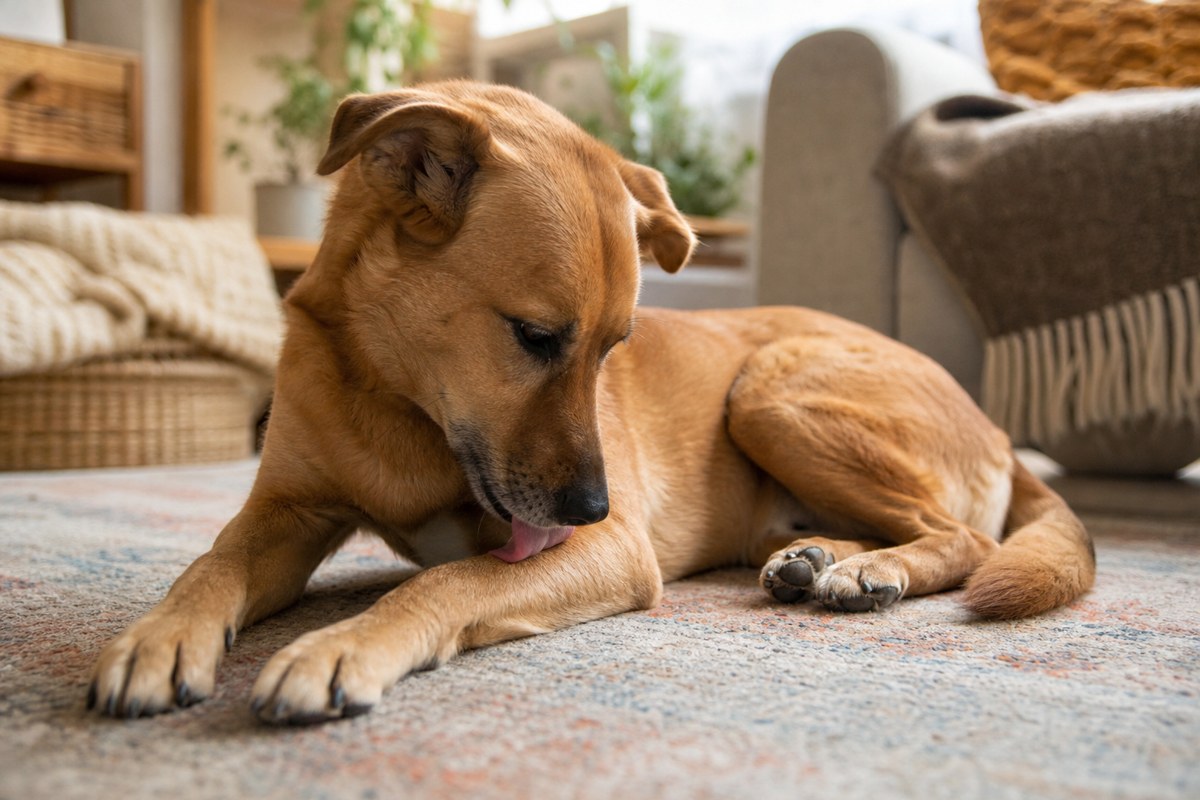
Quick answer: Some licking is normal grooming. But constant licking of the same spot, red or wet skin, hair loss or a bad smell usually means something is bothering your dog. The most common causes are allergies, fleas, skin infections, pain and boredom or anxiety.
Dogs aren’t as fussy about grooming as cats, but most dogs lick themselves now and then, especially after eating, coming in from a walk or before a nap.
When licking becomes frequent or intense, it’s usually a sign. And because constant licking can damage the skin and cause infections, it’s worth finding out why.
Normal vs. Too Much
| Usually normal | Worth a closer look |
|---|---|
| Brief licking after meals or walks | Licking that wakes you at night |
| Cleaning after going potty | Licking the same spot over and over |
| Licking a small scrape for a moment | Red, wet, stained or bald patches |
| Occasional paw licking | Bad smell, swelling, limping or scabs |
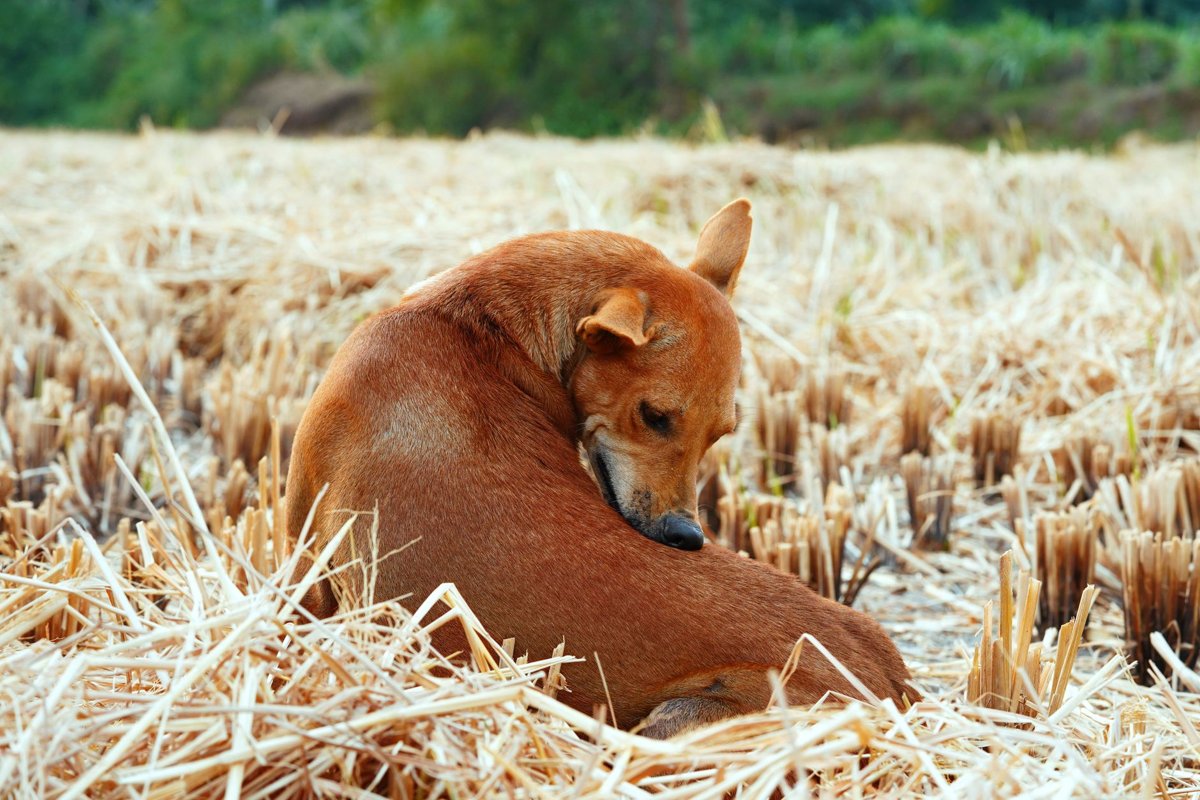
Common Causes of Excessive Licking
- Allergies. Environmental allergies (pollen, dust mites, mold) and food allergies are among the most common reasons. Paws, belly, armpits and the base of the tail are typical itchy spots.
- Fleas and other parasites. Even a few flea bites can cause intense itching in allergic dogs.
- Skin infections. Bacterial and yeast infections often develop in licked areas, creating an itch-lick cycle.
- Pain. Dogs may lick over sore joints, like an arthritic wrist or knee.
- Anal gland problems. Licking or scooting at the rear end can signal full or irritated anal glands.
- Boredom or anxiety. Licking can be self-soothing, much like nail biting in people.
- Dry skin, especially in winter.
Lick Granulomas
Some dogs lick one spot so much, often on the front leg, that it becomes a raised, hairless, open sore called an acral lick granuloma. These can be stubborn and usually need a vet’s help, since infection, an underlying itch and behavior often all play a part.
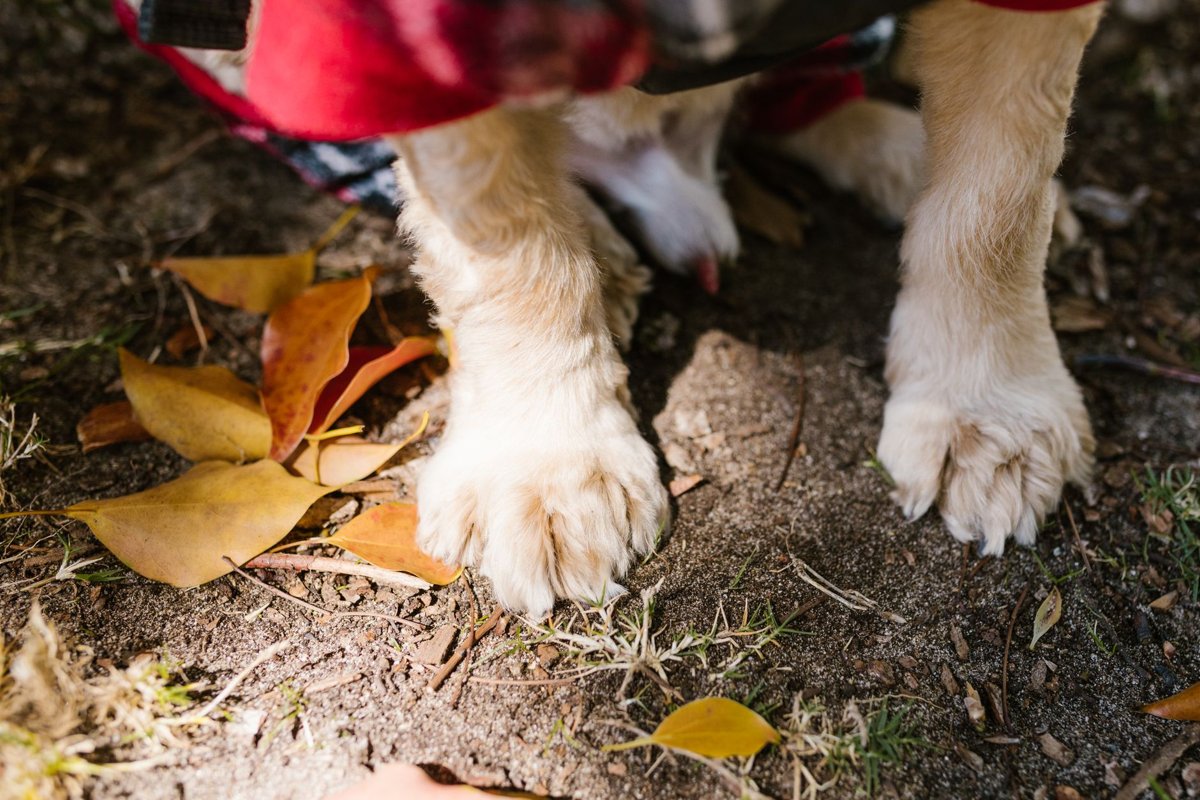
What You Can Do
- Check for fleas and keep up with flea prevention.
- Wipe paws and belly after walks to remove pollen and road salt.
- Keep your dog’s skin and coat clean with a dog-specific shampoo, not human shampoo.
- Add exercise and enrichment for bored or anxious dogs.
- Use a cone or recovery suit if your vet recommends it to let skin heal.
- Don’t put human creams on the skin without asking your vet; some are toxic if licked.
When to See the Vet
- Licking lasts more than a few days
- Red, broken, oozing, smelly or hairless skin
- Limping or licking at a joint
- Scooting or licking at the rear
- Your dog seems uncomfortable or can’t settle
Helpful Products
- Dog paw and body wipes: Wipes away allergens after walks.
- Soft recovery cones: Lets licked skin heal.
- Lick mats: Redirects licking to something healthy.
Frequently Asked Questions
Why does my dog lick himself at night?
Itchiness often feels worse when things are quiet. Allergies, fleas and skin infections are common causes.
Is it bad if my dog licks his wound?
A little is natural, but too much licking can slow healing and cause infection. Ask your vet about a cone.
Can food allergies cause licking?
Yes. Food allergies can cause itchy skin and paws. Your vet can guide an elimination diet trial.
Why does my dog lick his private area so much?
Some cleaning is normal, but frequent licking can signal a urinary infection, skin irritation or anal gland issues. See your vet.
The Bottom Line
A little licking is just grooming. Constant licking is a symptom. Check for fleas, keep skin clean, keep your dog busy, and see your vet if licking lasts, leaves red or bald skin, or seems to bother your dog.
Keep reading:
- Why Do Dogs Lick Their Paws? Common Causes and Home Care
- Why Do Dogs Chew on Their Feet and Nails? Causes and Solutions
- Flea and Tick Prevention for Dogs and Cats: Types, Safety and Tips
- 14 Common Dog Health Problems: Signs to Watch For
As an Amazon Associate, we earn from qualifying purchases. This post contains affiliate links.