
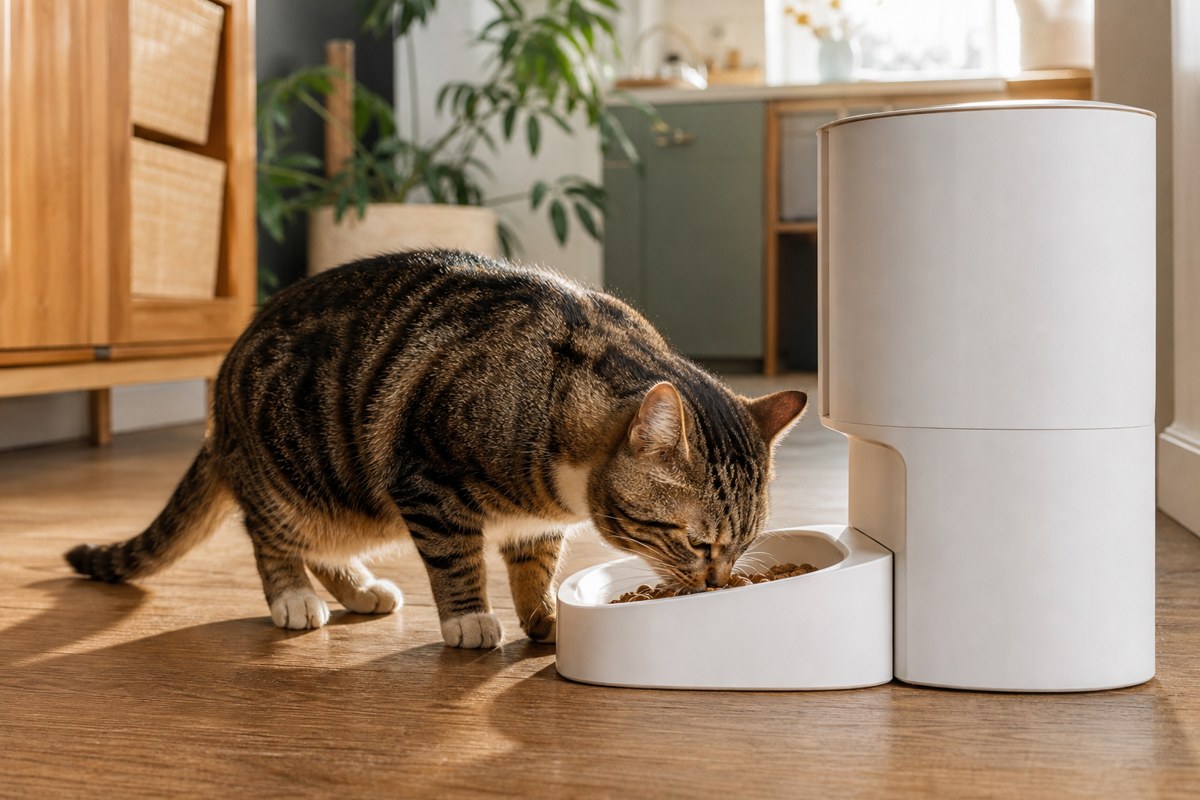
Quick answer: An automatic pet feeder is worth it if you need consistent meal times or portion control, especially for cats. Look for accurate portioning, a backup battery, a jam-resistant design and dishwasher-safe parts. It isn’t a substitute for daily check-ins on your pet.
If your cat starts yelling for breakfast at 4 a.m., or your schedule makes on-time meals tough, an automatic feeder can help. It dispenses set portions of dry food at set times, every day.
Feeders can also help with weight control by preventing free-feeding. But they’re not right for every pet or situation. Here’s how to decide.
Types of Automatic Feeders
| Type | Best for | Limits |
|---|---|---|
| Gravity feeders | Pets who don’t overeat | No portion control, so not for weight-prone pets |
| Programmable dry food feeders | Scheduled meals and portion control | Dry food only |
| Smart or app-connected feeders | Adjusting meals and checking feedings from your phone | Need Wi-Fi, cost more |
| Rotating tray feeders | Wet food or small meals | Limited number of meals, food sits out |
| Microchip feeders | Multi-pet homes with different diets | Higher cost, pets need microchips or collar tags |
Features That Matter Most
- Accurate portions. Look for portion sizes small enough for your pet, especially cats and small dogs.
- Backup power. A battery backup keeps meals coming during a power or Wi-Fi outage.
- Jam resistance. Kibble shape and size can cause jams. Check that your food size is compatible.
- Pet-proof lid. Clever cats and dogs will try to break in.
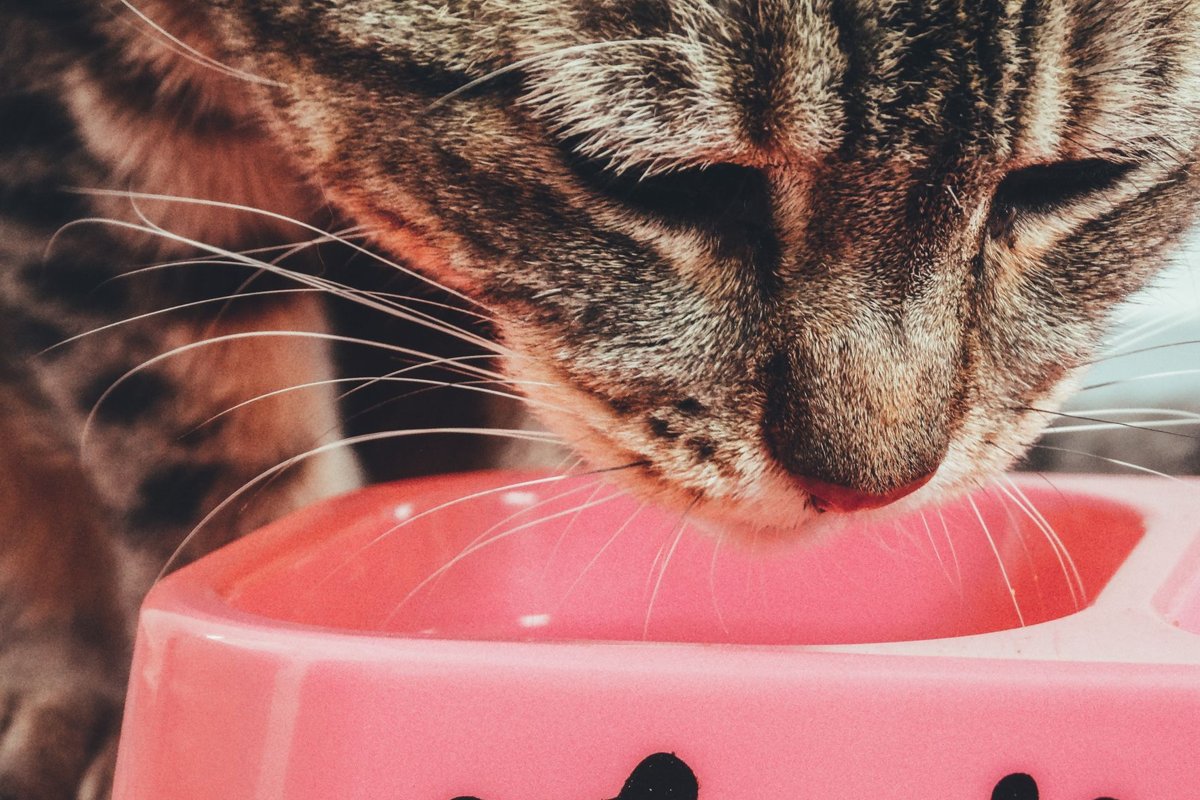
- Easy cleaning. Removable, dishwasher-safe bowls and hoppers keep oils and bacteria from building up.
- Stainless steel bowl. Easy to clean and less likely to hold bacteria than scratched plastic.
When an Automatic Feeder Helps
- Pets who wake you up early for food
- Pets who need several small meals a day
- Weight loss plans that need strict portions
- Busy work schedules or long commutes
When It Isn’t the Right Choice
An automatic feeder doesn’t replace a person checking on your pet. If your pet stops eating, you might not notice for a while. A pet that skips meals, especially a cat, needs prompt attention, since cats can get seriously ill if they don’t eat for even a day or two.
Feeders also aren’t a plan for leaving pets alone for long trips. Water, litter, and health checks still need a person. For trips, a pet sitter or boarding is the safer choice.
If your pet is diabetic or on a prescription diet, ask your vet before using any feeder.
Tips for Getting Started
- Run the feeder while you’re home for a few days to make sure it works and your pet uses it.
- Measure portions with a kitchen scale or measuring cup to confirm accuracy.
- Clean the bowl and hopper regularly, since stale kibble oils can go rancid.
- Keep fresh water available at all times. A pet water fountain pairs well with a feeder.
Helpful Products
- Programmable automatic pet feeders: Set meal times and portion sizes for dry food.
- Pet water fountains: Keeps fresh water flowing between refills.
- Microchip pet feeders: Keeps multi-pet homes on separate diets.
Frequently Asked Questions
Are automatic feeders good for cats?
They can be, especially for cats who beg early or need portion control. Watch to make sure your cat is actually eating, since appetite changes in cats need quick attention.
Can I leave my pet alone for a weekend with an automatic feeder?
It’s not recommended. Pets still need fresh water, litter or potty breaks, and someone to notice if something is wrong.
Do automatic feeders work with wet food?
Most only handle dry food. Some rotating tray feeders hold wet food, but it shouldn’t sit out for long periods.
How do I stop my dog from breaking into the feeder?
Choose a feeder with a locking lid and a sturdy, heavy base, or place it where your dog can’t knock it over.
The Bottom Line
An automatic feeder is a handy tool for regular meal times and portion control. Pick one with accurate portions and backup power, test it while you’re home, and keep checking in on your pet every day.
Keep reading:
- Cat Nutrition Basics: What to Feed for Optimal Health
- Why Do Dogs Overeat? Begging, Food Obsession and Healthy Weight
- Why Isn't My Dog Eating? Common Causes and When to Worry
- Keeping Indoor Cats Happy and Healthy
As an Amazon Associate, we earn from qualifying purchases. This post contains affiliate links.