
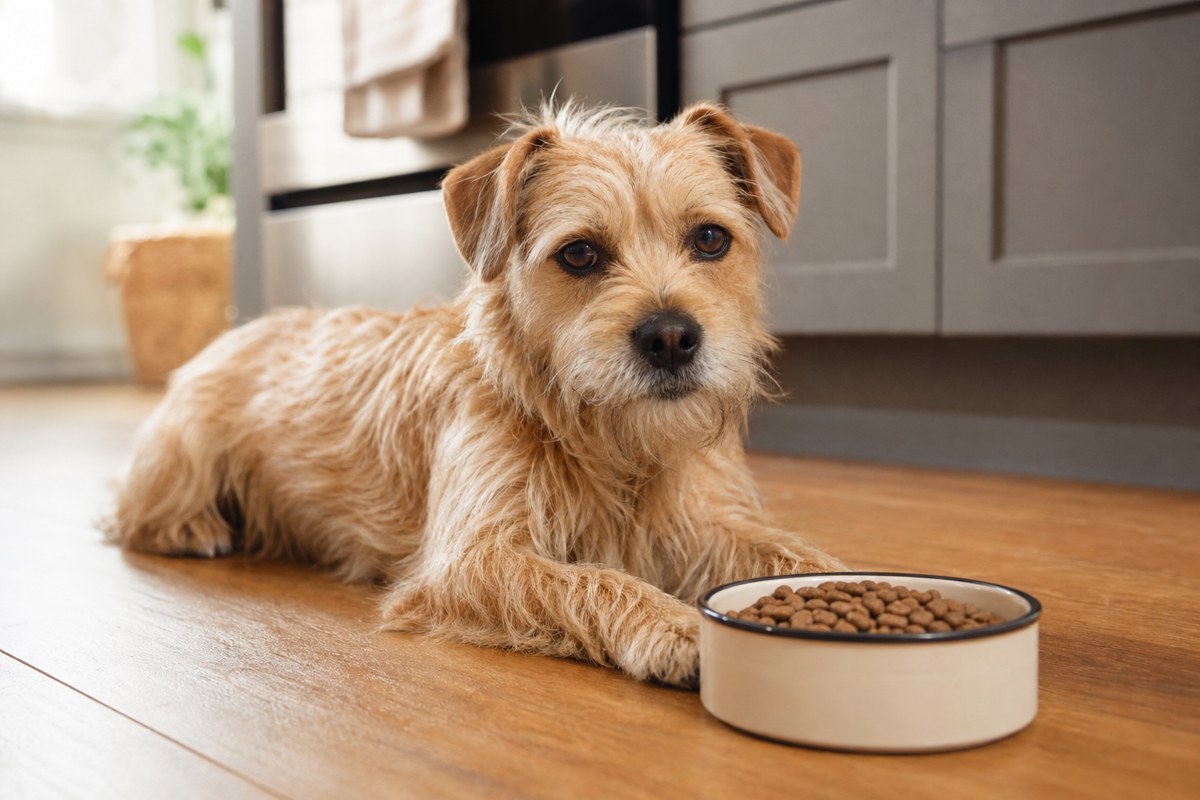
Quick answer: Dogs skip meals for many reasons, from stress, heat or a new food to dental pain, stomach upset or illness. A healthy adult dog missing one meal but acting normal is usually not an emergency. Call your vet if your dog hasn’t eaten in 24 hours, or sooner for puppies, seniors, small dogs, or any dog that’s vomiting, lethargic or in pain.
Most dogs get excited about food, so when one walks away from the bowl, it’s natural to worry. Sometimes the cause is simple, like hot weather or a change in routine. Other times, a poor appetite is the first sign that something is wrong.
Here’s how to figure out which it is, and when to stop waiting and call your vet.

Common Non-Medical Reasons
- Stress or change. Moving, travel, boarding, a new pet or a new schedule can put dogs off food for a day or two.
- Hot weather. Many dogs eat less in the heat.
- Picky eating. Dogs who get lots of treats or table scraps may hold out for something better.
- A new food they don’t like, or a food that’s gone stale.
- Lower activity. Less exercise can mean a smaller appetite.
Medical Reasons
- Dental problems like broken teeth, infected gums or mouth pain, which are very common in small and senior dogs
- Stomach or intestinal upset, including eating something they shouldn’t have
- Intestinal blockage from a toy, sock or bone (an emergency)
- Infections or fever
- Pain anywhere in the body, including arthritis
- Kidney, liver or pancreas disease
- Medication side effects or recent vaccines (usually brief)
- Nausea from many different conditions
What You Can Try at Home (Healthy Dog, One Missed Meal)
- Check that the food is fresh and hasn’t changed.
- Feed in a quiet spot away from other pets.
- Stick to regular meal times and pick up uneaten food after 15 to 20 minutes.
- Cut back on treats so your dog is hungry at mealtime.
- Slightly warm wet food to make it smell more appealing.
- Don’t switch foods over and over. That can create a pickier eater.
When to Call the Vet
Call your vet promptly if your dog:
- Hasn’t eaten anything in about 24 hours (sooner for puppies, toy breeds, seniors or diabetic dogs)
- Is vomiting, especially repeatedly, or has diarrhea
- Is lethargic, hiding, weak or seems painful
- Has a swollen or painful belly, or is retching without bringing anything up (go to an emergency vet)
- May have eaten a toy, bone, sock or something toxic
- Is drinking much more or much less than usual
- Is losing weight
Senior Dogs and Appetite
Older dogs often eat a bit less as they slow down, and some get pickier. But appetite changes in seniors are more often linked to dental disease, kidney problems or pain, so they deserve a vet check rather than a wait-and-see approach. Our senior Yorkie, Gracie, has always been a picky eater, so we pay close attention to the difference between her normal pickiness and a real change.

Helpful Products
- Dog toothbrush kits: Daily brushing helps prevent the dental pain that can kill appetite.
- Elevated dog bowls: Can be more comfortable for some large or senior dogs.
- Dog food storage containers: Keeps kibble fresh and tasty.
Frequently Asked Questions
How long can a dog go without eating?
Healthy adult dogs can technically go a few days, but you shouldn’t wait that long. Call your vet if your dog hasn’t eaten in about 24 hours, and sooner for puppies, small dogs or seniors.
Why is my dog not eating but still drinking water?
It can be stress or mild stomach upset, but it can also signal illness. If it lasts more than a day or comes with other symptoms, call your vet.
Should I give my dog human food if they won’t eat?
Not without talking to your vet. Some foods are toxic to dogs, and rich foods can cause stomach upset or pancreatitis.
Why will my dog eat treats but not food?
This often points to picky eating, but dental pain can also make crunchy kibble uncomfortable. A vet check can rule that out.
The Bottom Line
One skipped meal in an otherwise happy dog usually isn’t cause for alarm. But appetite is one of the best early warning signs dogs give us. If the bowl stays full for a day, or comes with vomiting, lethargy or pain, call your vet.
Keep reading:
- Why Do Dogs Overeat? Begging, Food Obsession and Healthy Weight
- 14 Common Dog Health Problems: Signs to Watch For
- Life With a Senior Yorkie: What 14-Year-Old Gracie Has Taught Us
- Dog Toothbrushes and Dental Care: Keeping Your Dog's Smile Healthy
As an Amazon Associate, we earn from qualifying purchases. This post contains affiliate links.