
Quick answer: The most common cause of bad dog breath is dental disease: plaque, tartar and gum infection. Other causes include eating gross things, mouth injuries and, less often, kidney disease, diabetes or liver problems. Daily brushing and regular vet dental checks are the best fix.
‘Dog breath’ is so common that many people think it’s normal. It isn’t. A healthy dog’s breath shouldn’t knock you over.
Persistent bad breath, called halitosis, is usually a sign of a problem in the mouth, and occasionally a sign of something elsewhere in the body.
Common Causes of Bad Breath
- Dental disease. Bacteria in plaque and tartar cause gum inflammation (gingivitis) and infection. Veterinary groups estimate most dogs have some dental disease by age three.
- Small breeds like Yorkies, Chihuahuas and Poodles are especially prone because their teeth are crowded.
- Food stuck in teeth or a foreign object, like a stick lodged in the mouth.
- Eating gross things like poop, garbage or dead animals.
- Broken teeth or tooth abscesses.
- Oral tumors, especially in older dogs.
What Different Smells Can Mean
| Smell | Possible cause |
|---|---|
| Foul, rotten | Dental disease or infection |
| Sweet or fruity | Possible diabetes, especially with more thirst and peeing |
| Ammonia or urine-like | Possible kidney disease |
| Very foul with yellow gums or eyes | Possible liver disease (urgent) |
These are clues, not a diagnosis. Your vet can check what’s really going on.
How to Freshen Your Dog’s Breath
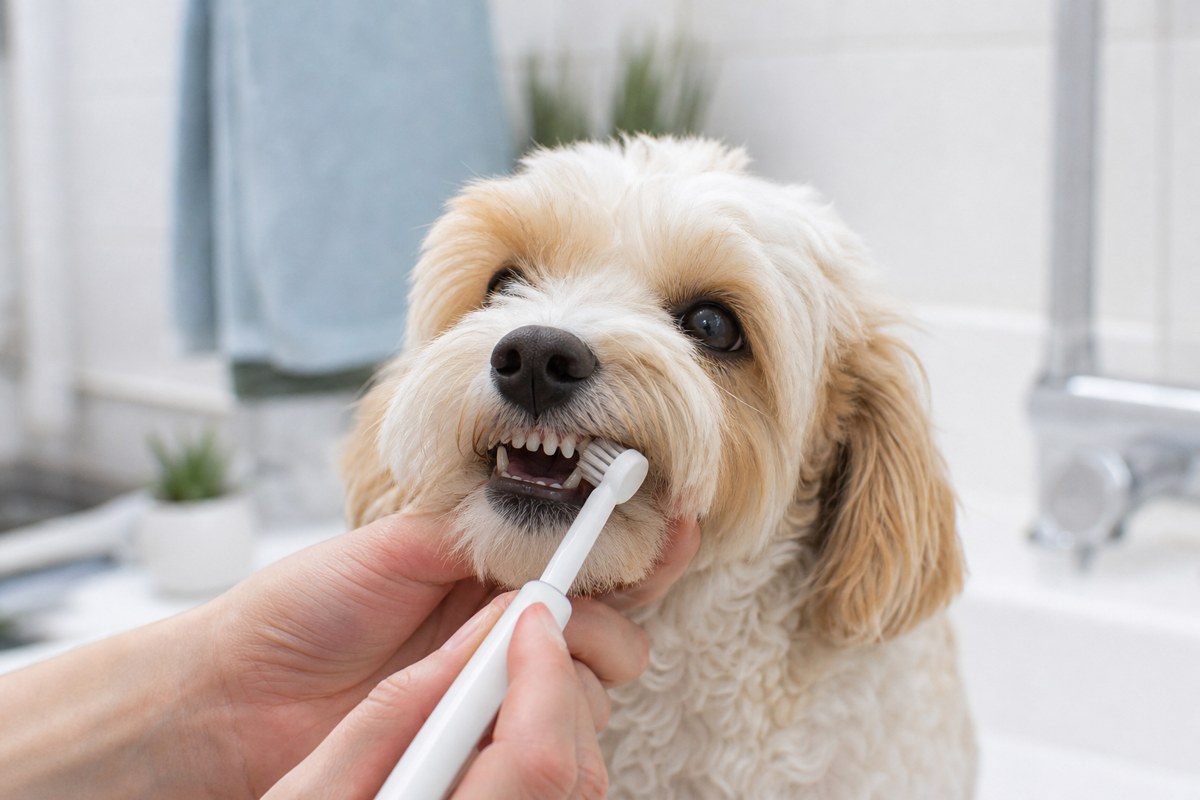
- Brush daily with a dog toothbrush and dog toothpaste. Never use human toothpaste, which can contain xylitol or fluoride levels not meant for dogs.
- Start slowly. Let your dog lick the toothpaste, then touch the teeth, then brush a few teeth at a time.
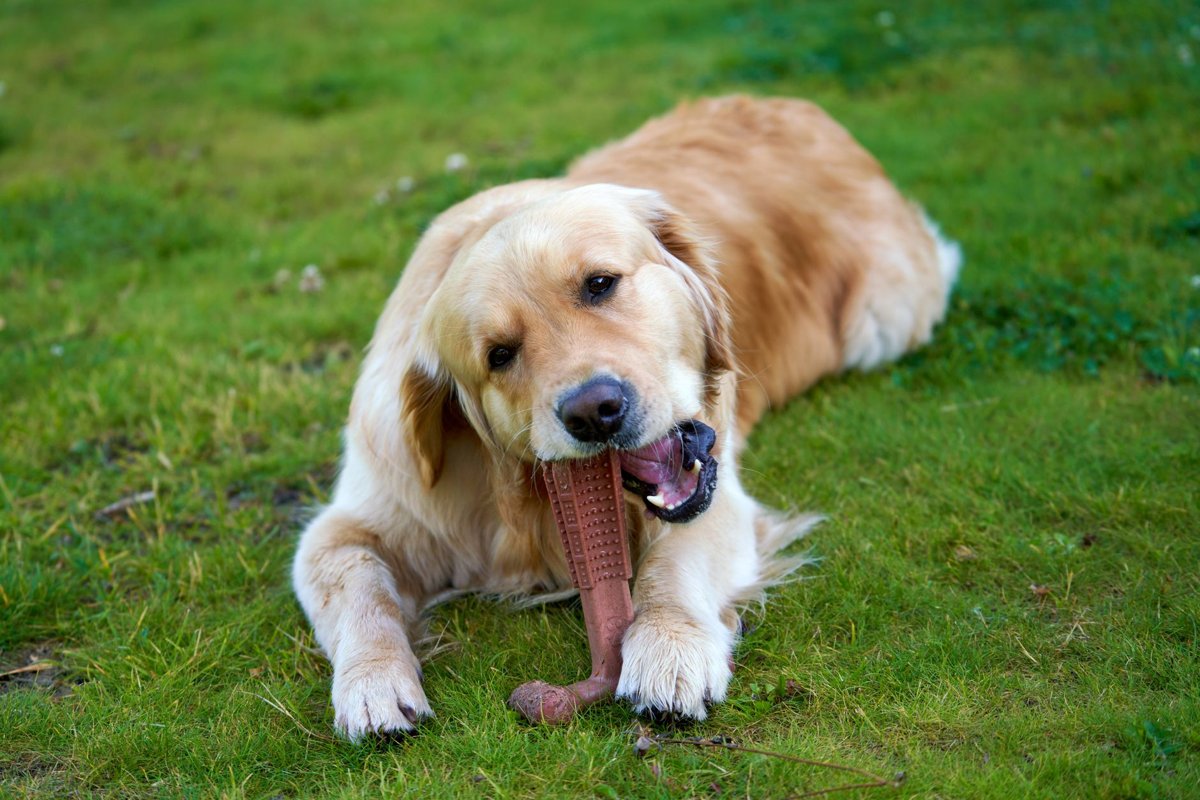
- Use dental chews with the Veterinary Oral Health Council (VOHC) seal for extra help.
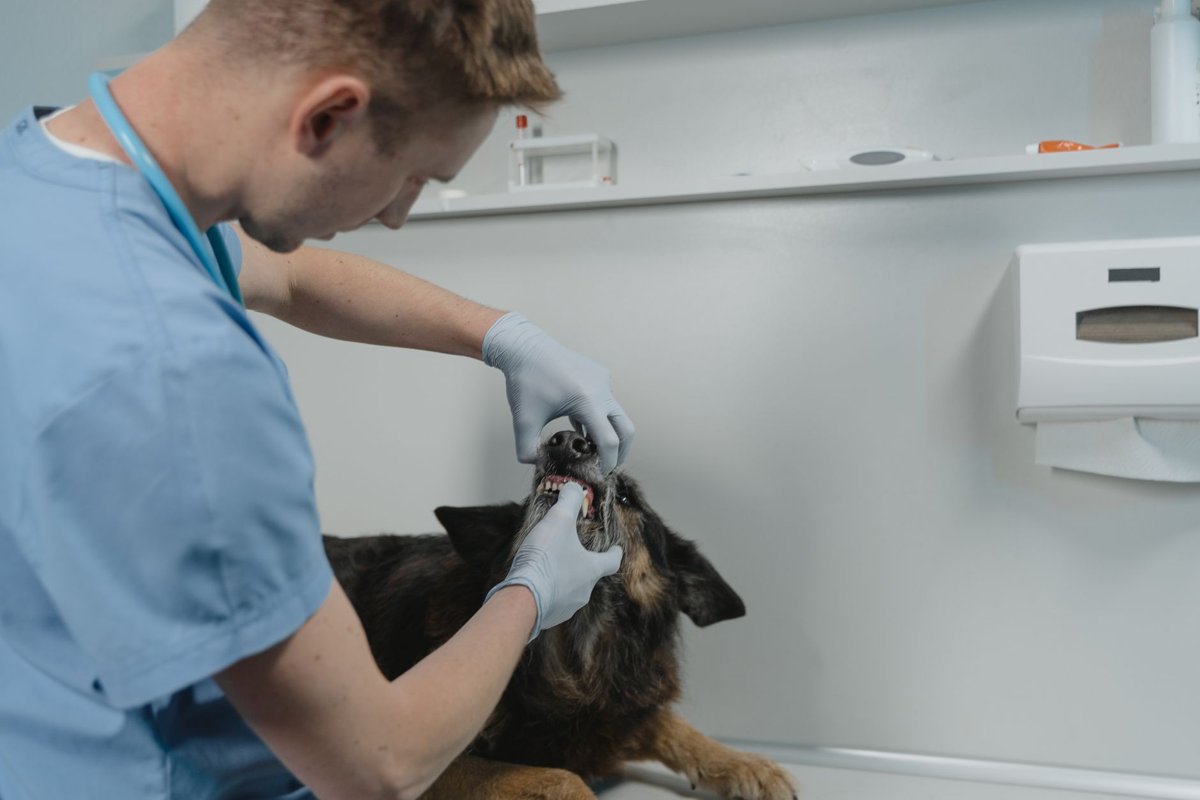
- Schedule professional cleanings when your vet recommends them. Cleaning under the gumline requires anesthesia.
- Keep up with checkups so problems are caught early.
When to See the Vet
- Bad breath that doesn’t improve with brushing
- Red, swollen or bleeding gums
- Brown tartar buildup, loose or broken teeth
- Pawing at the mouth, drooling or dropping food
- Eating less or chewing on one side
- Swelling on the face or under the eye
- Breath changes along with more thirst, peeing, vomiting or weight loss
Helpful Products
- Dog toothbrush and toothpaste kits: The single best habit for fresh breath.
- VOHC-accepted dental chews: Helps reduce plaque between brushings.
- Finger toothbrushes: An easy start for dogs new to brushing.
Frequently Asked Questions
Is it normal for dogs to have bad breath?
Mild odor after eating is normal, but strong, persistent bad breath usually means dental disease or another problem.
How often should I brush my dog’s teeth?
Daily is ideal. Even a few times a week helps.
Do dental chews replace brushing?
No. They help, but brushing is still the most effective home care.
Can bad breath mean my dog is sick?
Sometimes. Sweet, ammonia-like or very foul breath with other symptoms can point to diabetes, kidney or liver disease.
The Bottom Line
Bad breath is usually your dog’s mouth asking for help. Brush daily, choose vet-approved dental chews, keep up with checkups, and see your vet if the smell sticks around or comes with other changes.
Keep reading:
- Dog Toothbrushes and Dental Care: Keeping Your Dog's Smile Healthy
- Life With a Senior Yorkie: What 14-Year-Old Gracie Has Taught Us
- 14 Common Dog Health Problems: Signs to Watch For
- Why Isn't My Dog Eating? Common Causes and When to Worry
As an Amazon Associate, we earn from qualifying purchases. This post contains affiliate links.