
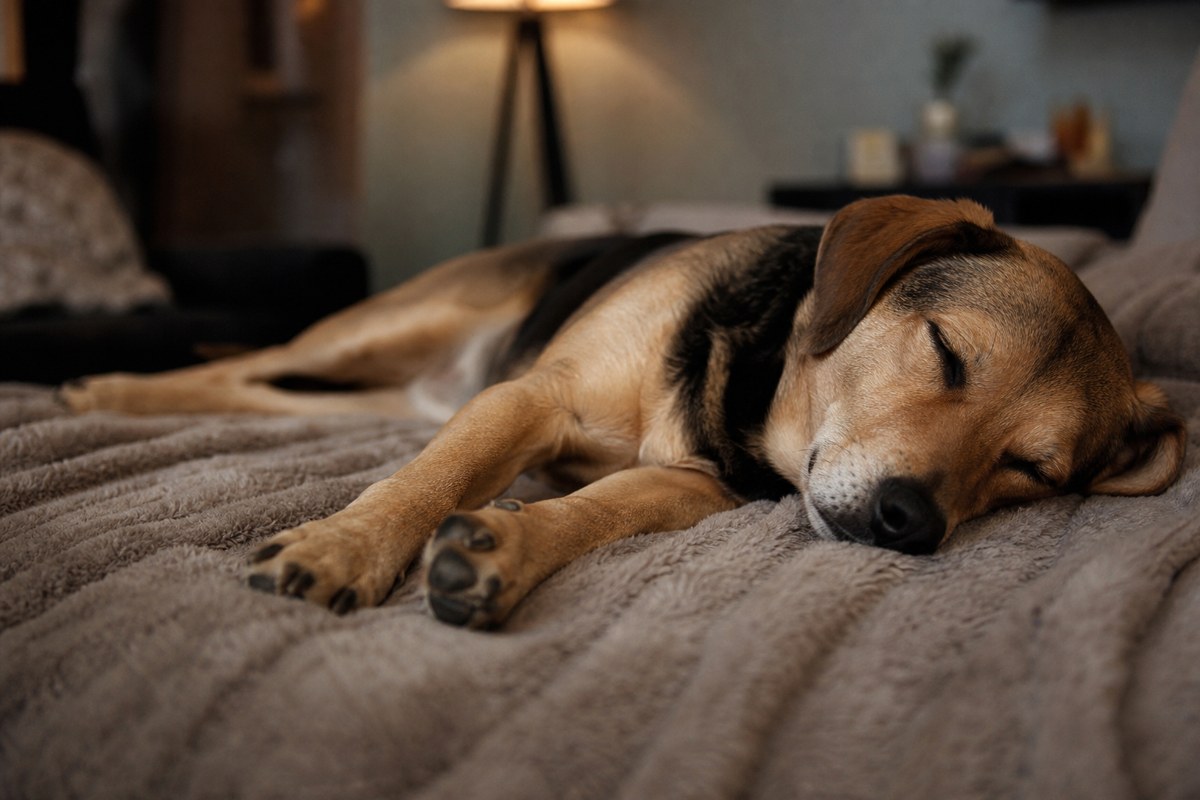
Quick answer: Running, paddling, twitching and soft woofs during sleep are usually normal dream behavior during REM sleep. A seizure looks different: the body goes stiff or jerks hard, your dog can’t be woken, and they may drool, lose bladder control or seem confused afterward. If you’re unsure, film it and show your vet.
If you’ve watched your dog sleep, you’ve probably seen it: legs paddling like they’re chasing a squirrel, little yips, twitching whiskers and eyelids. It looks like they’re running a race in their dreams, and in a way, they might be.
Most of the time, this is completely normal. But it’s worth knowing the difference between dream movements and something that needs a vet’s attention.
Why Dogs Move in Their Sleep
Like people, dogs cycle through different stages of sleep. During REM (rapid eye movement) sleep, the brain is very active and dreams are most likely to happen. Normally, the body is mostly ‘paused’ during REM so we don’t act out our dreams, but the pause isn’t perfect. Small twitches, paddling legs, eye movements under the lids and soft vocal sounds slip through.
Research on animal sleep, including well-known studies in rats, suggests mammals replay their daytime experiences during sleep. So when your dog paddles, they may be replaying a walk, a game of fetch or a run around the yard.
Who Does It Most?
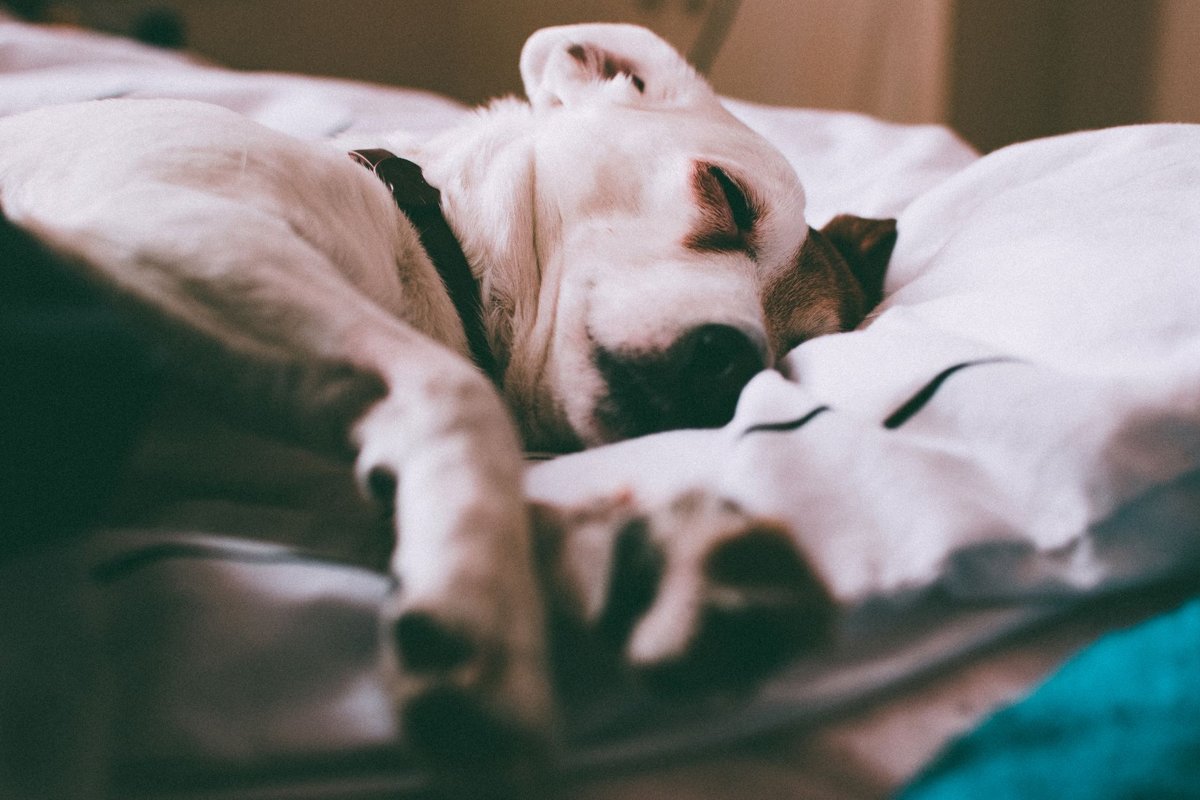
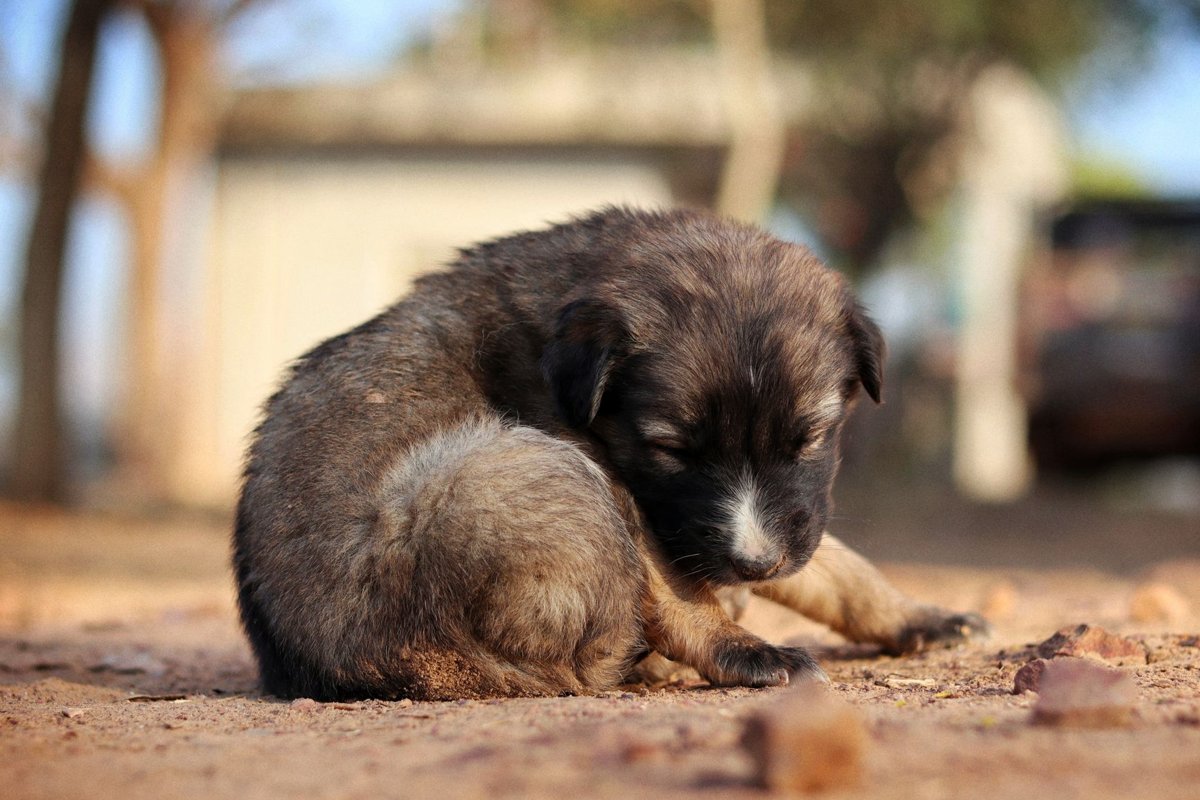
- Puppies move and twitch in their sleep more than adult dogs.
- Senior dogs also tend to have more sleep movements.
- Smaller dogs often have more frequent, shorter dream cycles than large dogs, according to sleep researchers.
Normal Dream Movements vs. a Seizure
| Normal dreaming | Possible seizure | |
|---|---|---|
| Movements | Light twitches, paddling, soft woofs | Rigid body, violent jerking, stiff limbs |
| Waking up | Wakes easily when you say their name | Can’t be woken or doesn’t respond |
| Other signs | None | Heavy drooling, peeing or pooping, foaming |
| Afterward | Normal, maybe a little groggy | Confused, wobbly, restless, or temporarily blind |
| Timing | Only during sleep | Can happen while awake or asleep |
What to Do
- Let a dreaming dog sleep. There’s no need to wake them. If you must, say their name softly instead of touching them, since a startled dog may snap without meaning to.
- If you think it’s a seizure, keep your hands away from their mouth (dogs don’t swallow their tongues), move furniture away so they don’t get hurt, and time it.
- Record a video if you can. It’s extremely helpful for your vet.
- Call your vet after any suspected seizure. Go to an emergency vet if a seizure lasts more than about 5 minutes, or if your dog has several seizures close together.
Other Sleep Changes Worth Mentioning to Your Vet
- Restlessness, pacing or panting at night
- Crying or seeming confused when waking up
- Sleeping much more or much less than usual
- Loud snoring that’s new, or gasping
In older dogs, nighttime restlessness and confusion can be signs of pain or canine cognitive dysfunction (similar to dementia). Both can often be managed with your vet’s help.

Helpful Products
- Orthopedic dog beds: A supportive spot for a good night’s sleep.
- Calming donut beds: Raised edges many dogs like to curl against.
- Pet cameras: Lets you record unusual nighttime episodes for your vet.
Frequently Asked Questions
Should I wake my dog up if they’re running in their sleep?
No. It’s normal dreaming. If you need to wake them, say their name gently rather than touching them.
Is my dog having a nightmare?
We can’t know what dogs dream about, but whimpering or twitching during sleep is usually normal. If they wake up scared, speak softly and let them settle.
How can I tell if my dog is having a seizure in their sleep?
Seizures usually involve a stiff body, strong jerking, drooling or loss of bladder control, and your dog won’t wake when you call them. Afterward they’re often confused.
Why does my puppy twitch so much while sleeping?
Puppies spend more time in active sleep and twitch more than adult dogs. It’s normal.
The Bottom Line
Paddling, twitching and quiet woofs are a normal part of how dogs dream. Let them sleep, learn the signs that look different, and if something seems off, take a video and talk to your vet.
Keep reading:
- Why Do Dogs Dream? The Science of Dog Sleep
- What Do Dogs Dream About? What Science Tells Us
- Life With a Senior Yorkie: What 14-Year-Old Gracie Has Taught Us
- 14 Common Dog Health Problems: Signs to Watch For
As an Amazon Associate, we earn from qualifying purchases. This post contains affiliate links.