
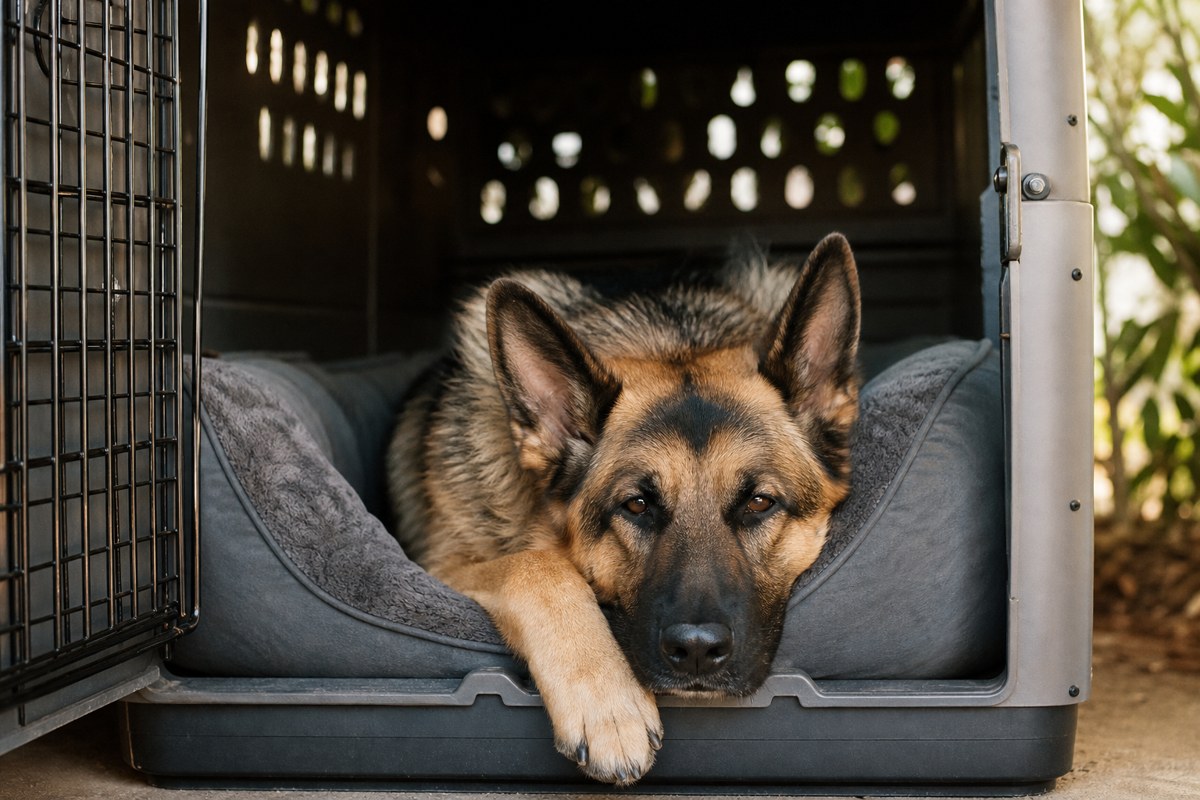
Quick answer: A large dog crate should let your dog stand without ducking, turn around and lie stretched out. Big dogs often need 42 to 48 inch crates, and giant breeds may need 54 inches or more. Choose sturdy wire or heavy-duty crates with strong latches, and crate train gradually.
Big dogs need big crates, and finding one that’s roomy, sturdy and practical can be tricky. A crate that’s too small is uncomfortable. One that’s too flimsy won’t hold a determined large dog.
Here’s how to choose and use a crate for a large or giant breed.
How to Measure
- Length: measure from nose to base of tail, then add 2 to 4 inches.
- Height: measure from the floor to the top of the head or ear tips while sitting, then add 2 to 4 inches.
- Compare your numbers to the crate’s interior dimensions, not just the size label.
Typical Crate Sizes
| Crate length | Often fits |
|---|---|
| 36 inches | Medium dogs, roughly 40 to 70 lbs depending on build |
| 42 inches | Large dogs like many Labradors and Boxers |
| 48 inches | Large breeds like German Shepherds and Golden Retrievers |
| 54 inches and up | Giant breeds like Great Danes and Mastiffs |
These are rough guides. Body shape matters, so always measure your own dog.
Best Crate Types for Big Dogs
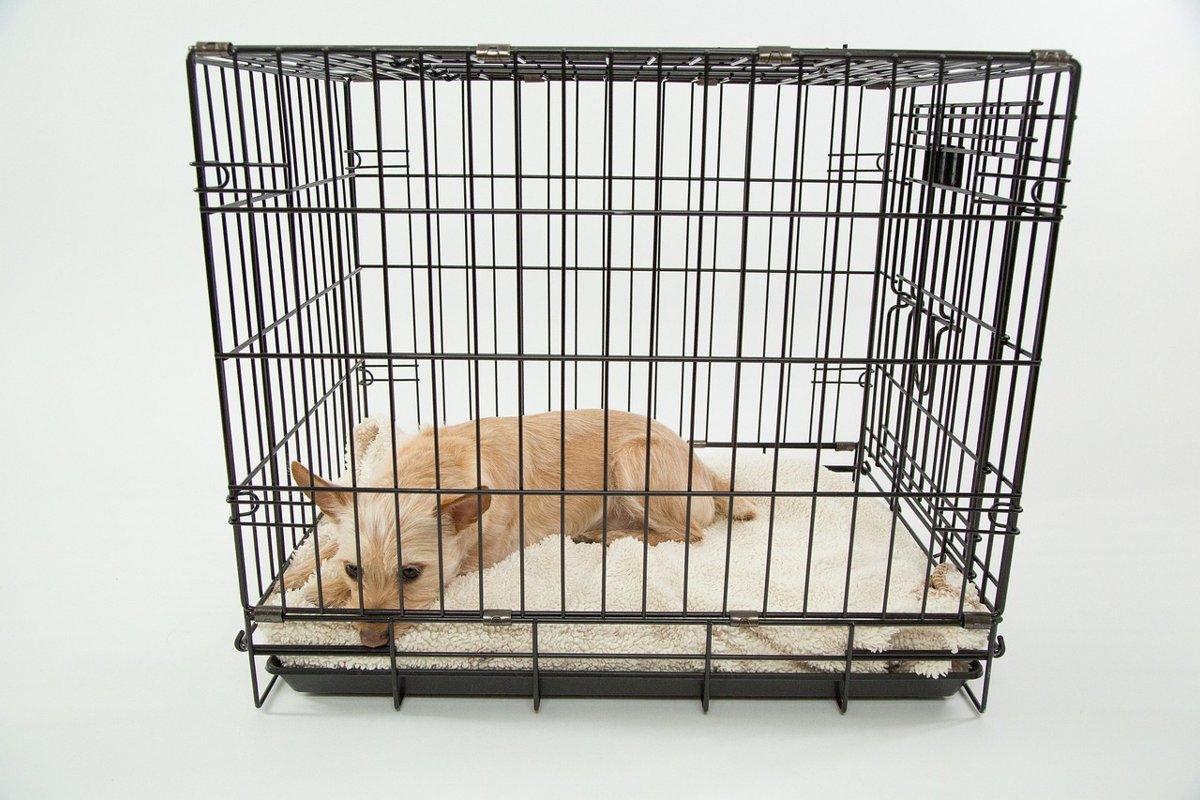
- Wire crates: good airflow, fold down, and often include a divider for puppies.
- Heavy-duty steel crates: for strong chewers or dogs who’ve escaped other crates.
- Plastic crates: good for travel, but giant sizes can be bulky and harder to find.
- Avoid soft-sided crates for large dogs, which can tear or collapse.
Features to Look For
- Two doors for flexible placement
- Secure latches at top and bottom
- A removable tray for easy cleaning
- Rounded edges and no sharp points
- Divider panel for growing puppies
Training Tips for Large Dogs
- Introduce the crate slowly with treats and meals.
- Make it comfy with a durable, chew-resistant pad.
- Exercise your dog before crate time.
- Offer a long-lasting chew toy.
- Keep crate times reasonable, with plenty of exercise and attention outside the crate.

Safety Notes
Remove collars with dangling tags, avoid leaving dogs crated in hot rooms, and never crate a dog who is panicking. Dogs that injure themselves trying to escape may have separation anxiety, which needs help from your vet or a qualified trainer.
Helpful Products
- Extra-large wire dog crates: Roomy, sturdy crates for big breeds.
- Heavy-duty dog crates: For strong dogs and escape artists.
- Chew-resistant crate pads: Comfort that stands up to big dogs.
Frequently Asked Questions
What size crate for a Labrador?
Many adult Labs fit a 42-inch crate, but measure your dog to be sure.
Can a crate be too big?
For house training puppies, yes. Use a divider until they’re reliably potty trained.
Are wire crates safe for large dogs?
Yes, if well made with secure latches. Dogs who bend wire may need a heavy-duty crate.
How do I stop my dog from escaping the crate?
Check latches, use a heavy-duty crate if needed, and address anxiety with training. Talk to your vet if your dog panics.
The Bottom Line
Large dogs need crates that are roomy, strong and well latched. Measure carefully, choose sturdy construction, and train patiently so your big dog sees the crate as a comfortable den.
Keep reading:
- How to Choose the Right Dog Crate and Crate Train Kindly
- How to Choose a Bed for a Large Dog: Support, Size and Durability
- Choosing the Perfect Dog Pen or Playpen for Your Pup
As an Amazon Associate, we earn from qualifying purchases. This post contains affiliate links.